Murcia doesn't get the press. It doesn't have the brand recognition of the Costa del Sol or the sheer flight connectivity of the Costa Blanca. Spend five minutes with a Spanish property portal, though, and something becomes obvious: the prices are different here. Meaningfully different. And for buyers who are willing to look past the marketing noise, that gap represents an opportunity that is quietly closing.
This is an honest guide to buying property in Murcia and the Costa Cálida — covering the towns that matter, what you actually pay, what you trade off, and how the buying process works in this region.
Why Buy Property in Murcia? What's Changing in This Market
The Region of Murcia sits between the Valencian Community to the north and Andalucía to the south. It's squeezed between two heavily marketed coastlines, which is partly why it slips through the cracks. Most buyers arrive at Alicante Airport and head straight up or down the N-332 without crossing the regional border.
There's also a perception issue. For decades, Murcia's coast was associated with agricultural plains and fishing villages rather than the polished resort infrastructure of Benidorm or Marbella. The region never bothered to build that brand, and some of its towns are still catching up on tourism infrastructure.
But things are shifting. Murcia International Airport (formerly Corvera) now handles direct routes from the UK. A growing number of European buyers — particularly German, Belgian, and British — have figured out that the same sun, the same sea, and similar property comes at a 20–40% discount compared to the Costa Blanca South. The Mar Menor lagoon — Europe's largest saltwater lagoon — is a genuinely unique natural asset that draws buyers who want calm, warm, safe water rather than the open Mediterranean.
New development is accelerating, particularly around the golf resorts inland and the coastal towns around Mazarrón and Águilas. Infrastructure is improving. Prices are rising, but from a low base.
If you're the kind of buyer who wants to get somewhere before it gets expensive, Murcia is worth serious attention.
Costa Cálida vs Costa Blanca: What's the Difference?
Both coasts offer sunshine, beaches, and affordable property. The differences matter, though.
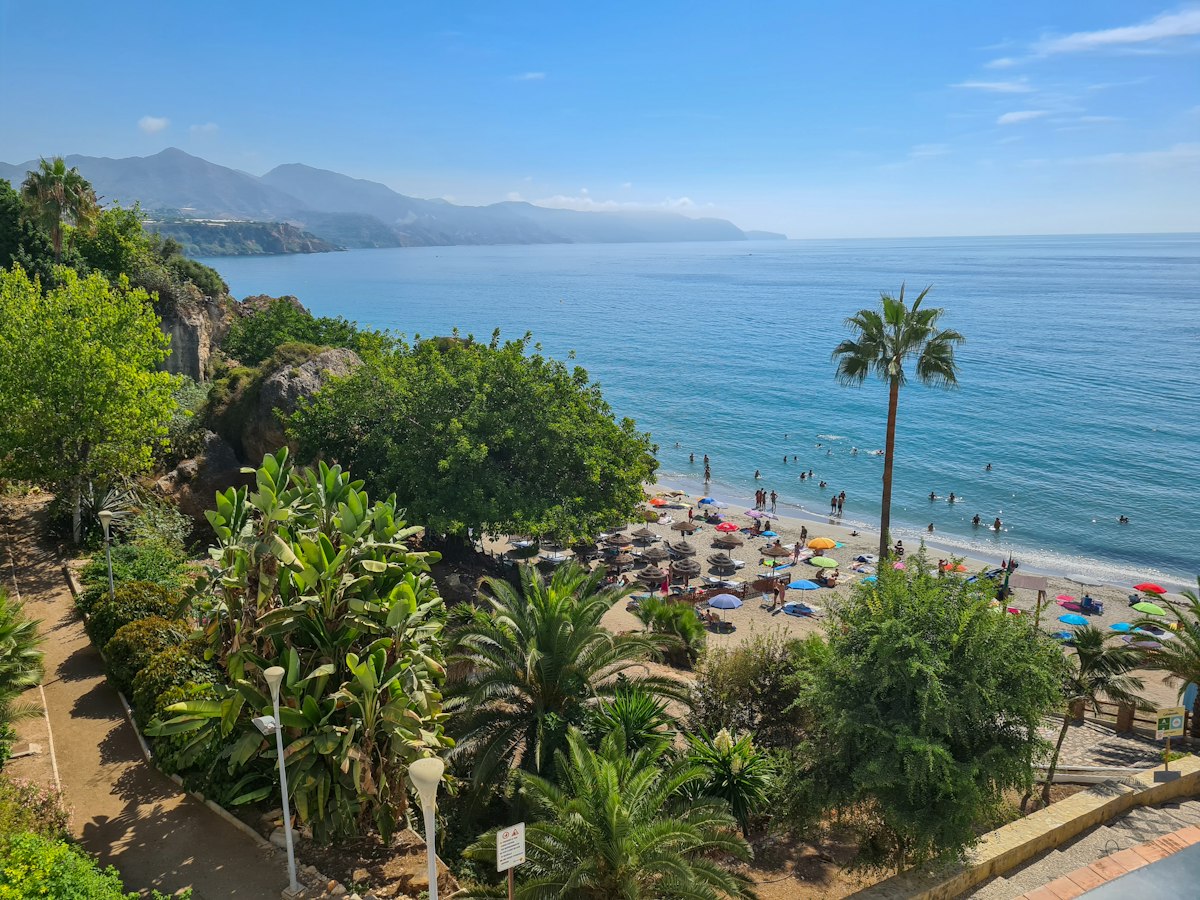
Climate: The Costa Cálida — literally the "warm coast" — averages around 315 sunny days per year. It's marginally warmer than the northern Costa Blanca and significantly drier than the Costa del Sol. Rainfall is very low. The Mar Menor lagoon sits a couple of degrees warmer than the open sea, making it particularly appealing for families with children and older buyers who want to swim without the cold.
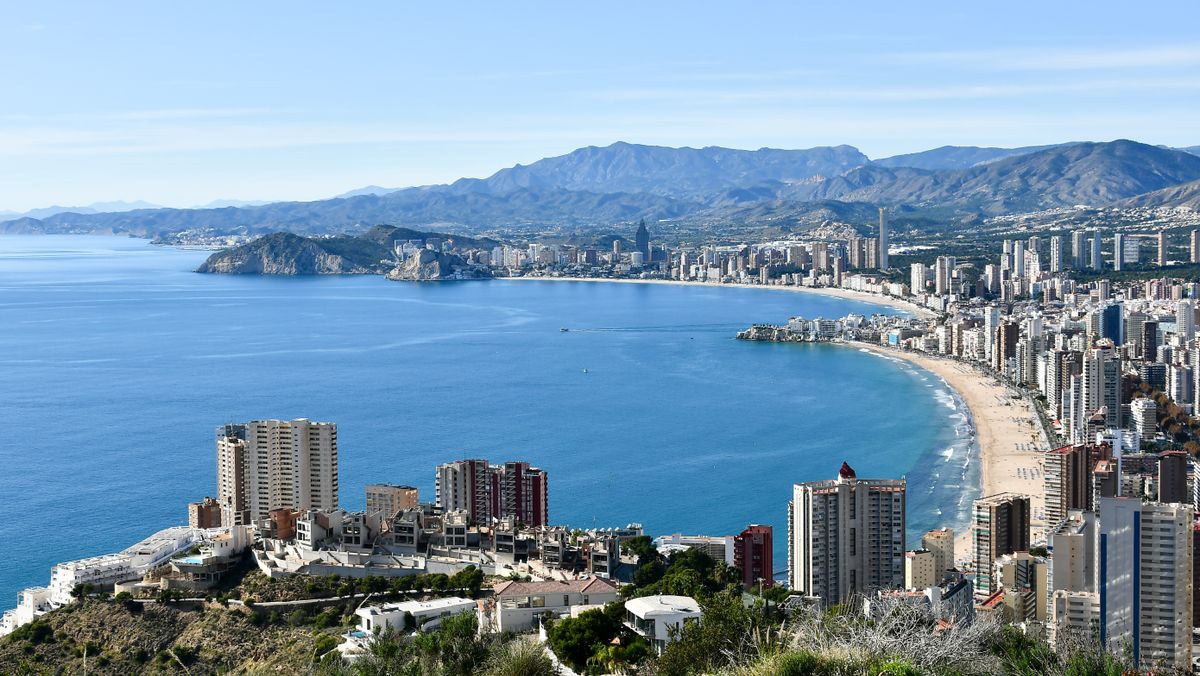
Crowds and development: The Costa Blanca South — Torrevieja, Orihuela Costa, Guardamar — is heavily developed and well-established. The infrastructure is there but so are the crowds. The Costa Cálida is less dense, less commercialised in many areas, and still has pockets of coastline that feel genuinely unspoiled.
Price: This is the clearest difference. Like-for-like property in Mazarrón or Águilas costs less than equivalent property in Torrevieja or Torremolinos. A detached villa with a pool that would cost €280,000–€320,000 in Orihuela Costa can often be found for €200,000–€250,000 in Murcia.
Expat infrastructure: The Costa Blanca has a deeper expat ecosystem — more English-speaking estate agents, established legal firms, British-owned bars and services. Murcia is growing but is not yet at the same level. If you need extensive English-language support on the ground, factor this in.
Rental market: The Costa Blanca's rental market is more mature and liquid. Murcia has solid rental demand around the Mar Menor and the golf resorts, but lower occupancy elsewhere in shoulder season. Buyers with strong rental income goals should be realistic.
The Key Towns and What You Get for Your Money
Mazarrón
Puerto de Mazarrón is the most popular coastal town for foreign buyers in the region. A working fishing port with a beach-resort character, it sits about an hour south of Murcia city. The permanent population is relatively small, which means summer crowds and winter quiet — factor in what kind of lifestyle you want year-round.
Prices here are genuinely attractive. Two-bedroom apartments in complexes with a pool start around €90,000–€130,000. Detached villas with private pools and gardens can be found from €180,000, with well-specified modern properties in the €250,000–€350,000 range. Frontline sea-view positions command a premium.
Águilas
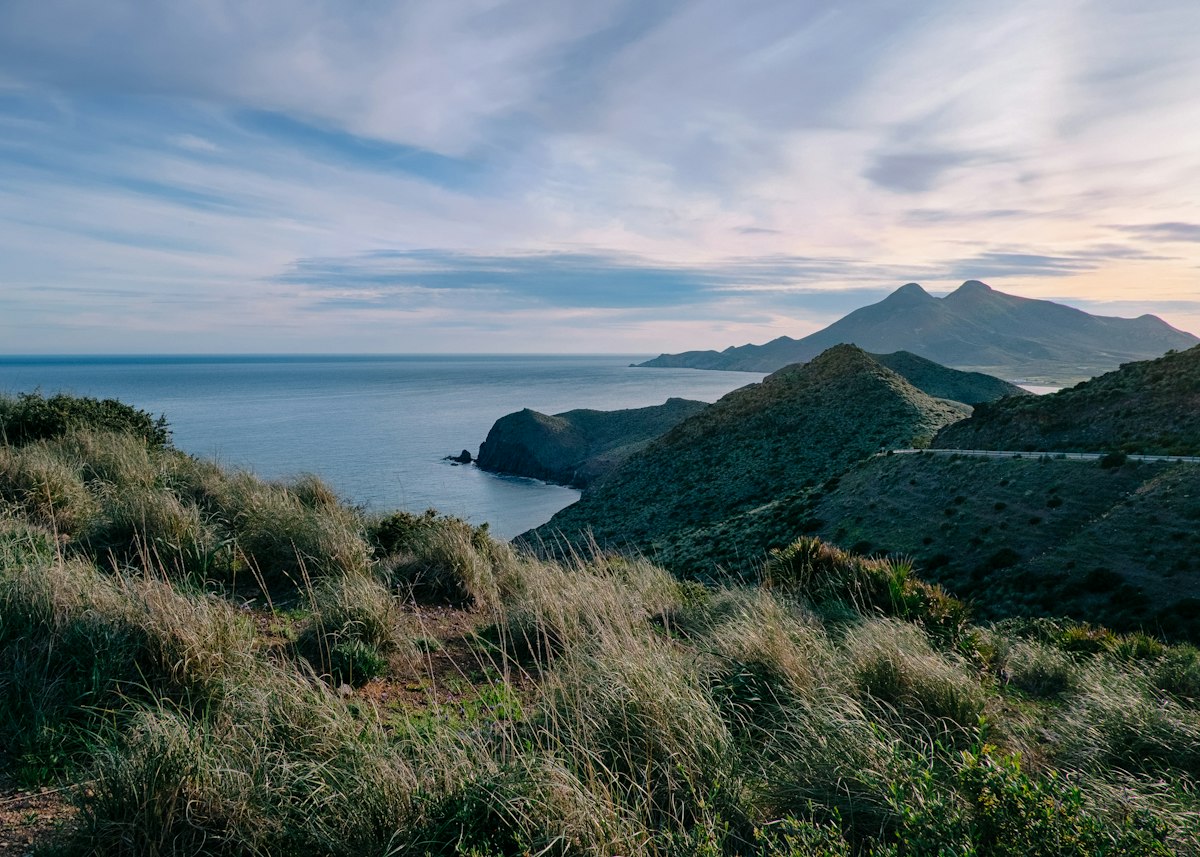
Águilas sits at the southern end of the coast, close to the border with Almería, and is widely considered one of the most beautiful undeveloped stretches of coastline in Spain. It has a genuine Spanish character — this is a real town with a real fishing fleet, not a resort built for foreign buyers. That's both its appeal and its limitation: the infrastructure for expats is thin, the English-speaking agent network is limited, and it requires more self-sufficiency.
For buyers who want genuine Spanish life and extraordinary natural surroundings — dramatic rocky coves, crystal water, low-rise development — Águilas is compelling. Property prices are lower than Mazarrón. Two-bedroom apartments from €80,000; village and countryside properties from €120,000.
Lo Pagán and Santiago de la Ribera
These two towns sit on the northern shore of the Mar Menor lagoon, close to San Pedro del Pinatar. The lagoon is the defining feature here: shallow, warm, calm water that's popular with families, older buyers, and anyone with limited mobility who finds the open sea difficult. The area also has a long tradition of therapeutic mud baths, which draws a health-tourism crowd.
Lo Pagán has a promenade, a marina, and a relaxed, year-round community. Santiago de la Ribera is slightly more upscale, with a beach club scene and better dining. Both are within comfortable range of Murcia Airport.
Property prices are reasonable — apartments near the lagoon from €100,000–€160,000, with townhouses and bungalows in the €140,000–€220,000 range. The proximity to the lagoon carries a premium over nearby inland positions.
Cartagena
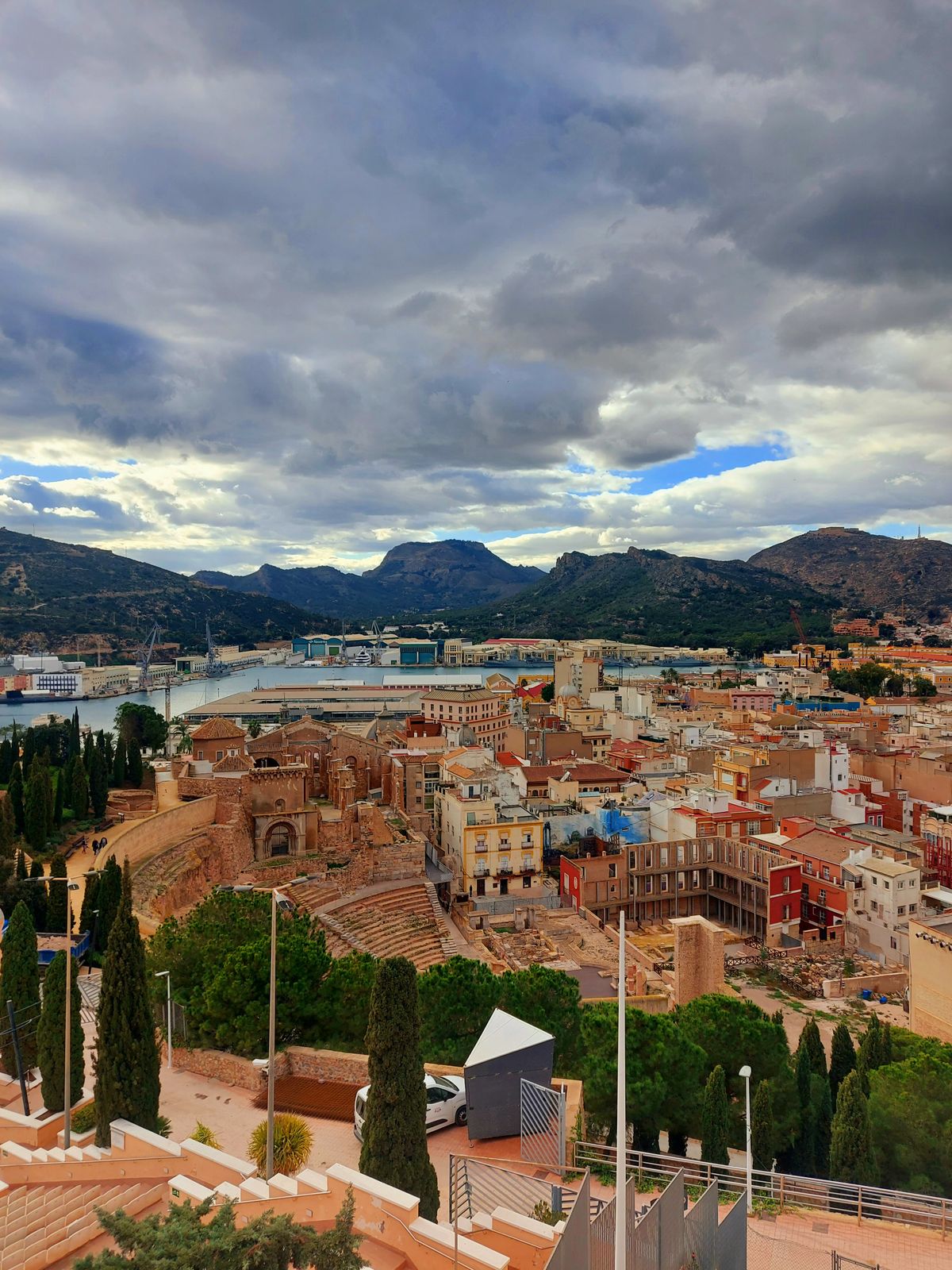
Cartagena is the most underrated city in the region and arguably one of the most underrated cities in Spain. It has 3,000 years of history — Carthaginian, Roman, Moorish — with a Roman theatre that rivals anything in Mérida, a thriving port, and a rapidly regenerating city centre. For buyers who want urban life with culture, restaurants, and a real Spanish population, Cartagena is increasingly attractive.
Property prices are very competitive. City centre apartments in renovated buildings from €90,000–€180,000. The gentrification is still early-stage in many neighbourhoods, meaning buyers who move now are likely to see stronger capital appreciation than comparable purchases in already-popular cities.
Property Types and Prices in 2025
Entry-level apartments (studios and one-beds): €60,000–€100,000. Typically older stock in smaller complexes, often without lift. Suitable for short stays or rental investment at the lower end.
Two-bedroom apartments in residential complexes: €90,000–€160,000. The most liquid segment of the market. Community fees of €80–€200/month are typical.
Townhouses and bungalows: €130,000–€220,000. Popular on the urbanisations around Puerto de Mazarrón and the Mar Menor. Usually private patios, often with small communal pools.
Detached villas with private pool: €180,000–€400,000 across most of the Costa Cálida. Well-specified modern builds and sea-view positions push toward the upper range. Golf resort properties (La Manga Club, Hacienda del Álamo) often sit above this.
Rural fincas and cortijos: €100,000–€300,000+ depending on land size and condition. The Murcia interior offers extraordinary value for buyers who want space and privacy. Renovation projects are available from €80,000 but require thorough legal due diligence on rural land classification.
Murcia Airport: Access from the UK and Ireland
Murcia International Airport (RMU, also known as Región de Murcia International Airport at Corvera) has transformed access to the region. It replaced the old San Javier airport, which was situated problematically close to the Mar Menor lagoon.
Current direct routes from the UK and Ireland include London Stansted (Ryanair), London Luton (Wizz Air), Manchester (Ryanair), Birmingham, and Dublin. The route network is still building and lags behind Alicante — this is a genuine consideration for buyers who travel frequently or want to fly in for weekends.
Alicante Airport is approximately 80–90 minutes north of the Costa Cálida towns around the Mar Menor, and remains a practical option for buyers in the northern part of the region. For Mazarrón and Águilas, Almería Airport (about an hour south) is worth considering given its Ryanair connections.
The access picture is improving, but it's not yet the seamless multi-airline, multi-city offering of Alicante. Be honest with yourself about how much this matters to your lifestyle.
The Buying Process in Murcia: What's Different
The core buying process in Murcia follows Spanish national law and is broadly the same as elsewhere in Spain. A few regional specifics are worth knowing.
NIE Number: Required before you can complete any purchase. Apply at a Spanish consulate in the UK or at a National Police station in Spain with an appointment. Allow 2–4 weeks. Your solicitor can arrange this on your behalf via power of attorney. Our NIE number guide covers every step of the process.
Independent legal representation: Essential, not optional. Appoint an independent Spanish abogado before signing anything. The solicitor should carry out full due diligence — checking the property registry (Registro de la Propiedad), confirming there are no outstanding debts or encumbrances, verifying planning compliance, and checking the Cadastre records match what you're buying. In Murcia, as elsewhere in Spain, there have been historical issues with rural properties built without full planning permission. Your solicitor's checks on this are critical.
Reservation and Arras: Standard process. Reservation deposit (typically €3,000–€6,000) takes the property off market. The Contrato de Arras follows — typically 10% of the purchase price. If you withdraw, you lose it. If the vendor withdraws, they owe you double.
Completion: At a Spanish notary. Balance paid, escritura de compraventa signed, keys handed over. The notary represents the state, not you personally — this is why your own solicitor is essential.
Bank account: Open a Spanish bank account early. Recommended banks in Murcia include CaixaBank, BBVA, and Sabadell, all of which have English-speaking services for non-residents. Needed for the transfer, for ongoing utility payments, and for tax obligations.
Costs and Taxes in Murcia (Region of Murcia ITP)
Murcia applies its own regional rate for Impuesto de Transmisiones Patrimoniales (ITP), the transfer tax on resale properties.
ITP in Murcia: a general rate of 7.75% (reduced from 8% for purchases from 25 July 2025), applied to the declared price or the Hacienda reference value, whichever is higher. This is lower than the 10% flat rate applied in the Valencian Community (Costa Blanca). For most buyers purchasing under €400,000, this saves money compared to buying equivalent property north of the regional border. See our full buying costs guide for a complete cost comparison across Spanish regions. The Comunidad Autónoma de la Región de Murcia publishes the official ITP rates and tax schedules for the region.
New builds: VAT (IVA) at 10%, plus Actos Jurídicos Documentados (AJD) stamp duty. The AJD rate in Murcia is 1.5%.
Notary and Land Registry: Budget 0.5–1% combined.
Solicitor: Typically 1–1.5% of the purchase price.
Total buying costs to budget for resale property: approximately 11–13% on top of the purchase price. Slightly lower than the Costa Blanca in most scenarios, but the difference is not dramatic. Don't let it be the deciding factor.
Ongoing costs: IBI (annual property tax) typically €300–€1,000/year. Community fees where applicable. Non-resident income tax (IRNR) applies if you don't rent the property — calculated on 1.1% or 2% of the cadastral value. Our ongoing costs of owning property in Spain breaks this down in detail.
New Build vs Resale in Murcia
New build is growing in Murcia, particularly around the golf resort developments (La Manga Club area, Desert Springs adjacent in Almería), and in new urbanisations near Puerto de Mazarrón. Advantages: modern specifications, 10-year Decennial Insurance (Seguro Decenal), payment plans during construction, and lower maintenance in early years. Risks: developer financial stability, delays, and the fact that surrounding infrastructure may not yet exist when you move in.
Resale remains the most common purchase. The key advantage is certainty — you see what you're buying. The key risk in Murcia, as elsewhere in Spain, is historical planning irregularities, particularly for older villas and rural properties. Your solicitor's due diligence is your protection here. Never skip it to save costs.
For buyers prioritising rental income, new builds in established locations tend to be more attractive to tenants than older stock.
Frequently Asked Questions
Do I need to speak Spanish to buy property in Murcia? No, but you'll find life easier with a bilingual solicitor and estate agent. The expat infrastructure in Murcia is growing but is less developed than on the Costa Blanca. In Cartagena, Lo Pagán, and around Puerto de Mazarrón, English-speaking professionals are available. In Águilas and more rural areas, expect to need a translator or bilingual agent.
Is the Mar Menor a good place to buy? The lagoon suffered serious environmental damage in 2019–2021 due to agricultural runoff. Recovery has been significant and ongoing, and the area remains popular — but buyers should research the current ecological status and understand the issue. The Mar Menor recovery plan is published by Spain's Ministry for Ecological Transition. The towns remain active; the lagoon's health directly affects tourism appeal and thus rental demand.
Can I get a mortgage in Murcia? Yes. Spanish banks lend to non-residents at typically 60–70% LTV on the property value (not the purchase price). You'll need to demonstrate income and pass affordability checks. Your solicitor can introduce you to mortgage brokers who specialise in non-resident lending.
Is Murcia safe? Yes. The Region of Murcia has low crime rates. Urban areas like Cartagena have improving but imperfect statistics in certain neighbourhoods — your solicitor can advise on specific locations.
What's the rental situation like? Murcia requires a Vivienda Turística licence to rent legally on a short-term basis. Applications go through the regional government. Rules and enforcement have tightened. Always obtain the licence before marketing a property for short-term rental. Long-term rental demand is solid around Murcia city, Cartagena, and near universities.
How does Murcia compare to nearby Almería? Almería (to the south, in Andalucía) has similarly low prices and even less-developed tourist infrastructure. The buying cost structure is different — Andalucía charges 7% ITP. Almería Airport has good Ryanair connections. The coasts are different in character — Almería has the more dramatic Mini-Hollywood landscape; Murcia has the Mar Menor. Both offer genuine value. Your choice between them probably comes down to specific town preferences more than anything else. Read our Almería property guide for a detailed comparison.
---
*Property prices and tax rates current as of Q2 2025. Tax rates and regulations can change — always confirm current figures with a qualified Spanish abogado. This guide is for informational purposes and does not constitute legal or financial advice.*
---
Interested in Murcia and the Costa Cálida? Search available properties across the region to see what your budget gets you — or get a free property valuation if you already own here.
Ready to find your property in Spain?
Browse thousands of verified listings from licensed local agents.
Browse properties →