Let's get something out of the way immediately. Yes, this is that Benidorm — the ITV sitcom, the stag dos, the Brits abroad caricature that's been running since the 1960s. If that's what you're braced for, fair enough.
But here's the thing: Benidorm has a permanent population of 75,000 people. It has quiet residential neighbourhoods where Spanish families have lived for generations, a calm west-facing beach that has nothing in common with the Levante strip, and a property market that serious buyers from Norway, Sweden, Finland, and Germany have been using as a solid mid-range investment for the better part of thirty years. The Scandinavians didn't get the memo about the reputation — or more likely, they just don't care about it.
This guide is for UK buyers who want to understand what Benidorm property actually looks like in 2026: realistic prices, the best areas to buy, honest rental yield numbers, and a clear-eyed assessment of who this market suits and who it doesn't.
Is Benidorm a Good Place to Buy Property?
The blunt answer: it depends entirely on what you're buying and where.
Benidorm sits on the northern Costa Blanca, 45km north of Alicante, with ALC airport 45 minutes away by car. The location is strong — excellent road links, a genuine year-round economy, and proximity to more upmarket towns like Altea and Calpe to the north.
The case for buying here is essentially threefold. First, price. Compared to Javea or Moraira further north, Benidorm offers meaningfully lower entry points — two-bedroom apartments in good residential areas from around €140,000. Second, rental demand. The tourist infrastructure that produces the Benidorm stereotype also produces some of the strongest short-term rental occupancy rates on the Costa Blanca. Beachfront Levante apartments don't sit empty in July. Third, amenities. For year-round living, Benidorm is genuinely well-served — supermarkets, hospitals, international schools, restaurants across every cuisine, public transport.
The case against is also real, and we'll cover it honestly in the downsides section. But for buyers who've done the research and understand what they're buying into, Benidorm makes legitimate financial sense.
Behind the Reputation — What Benidorm Really Is
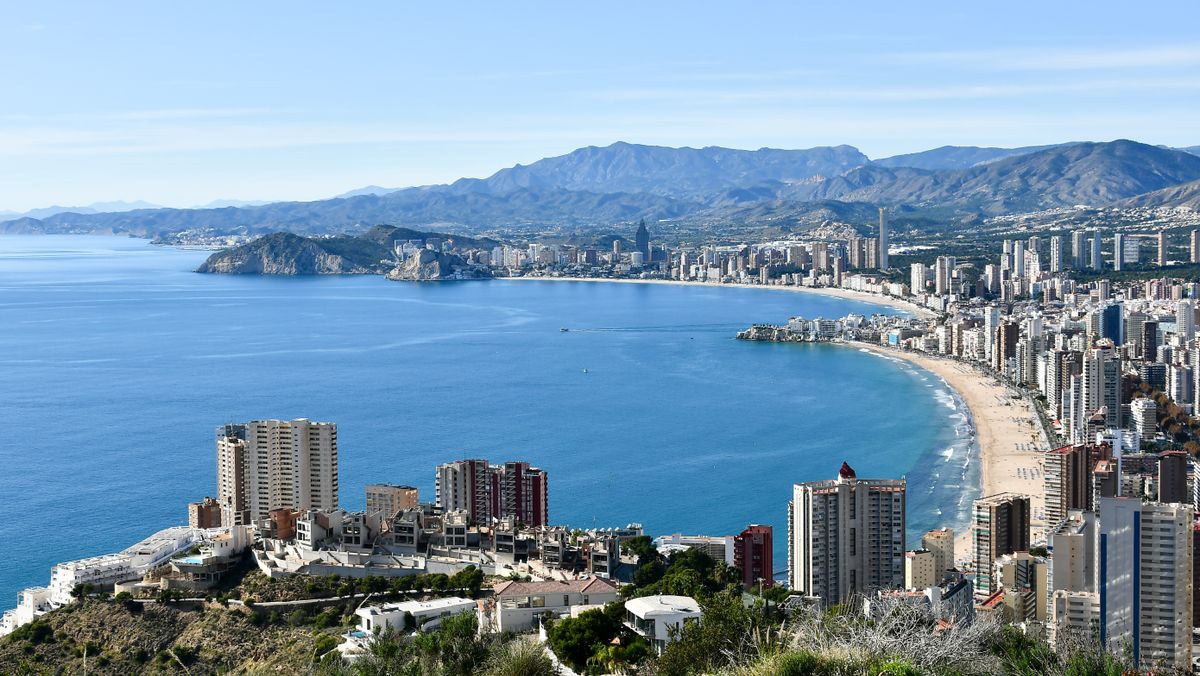
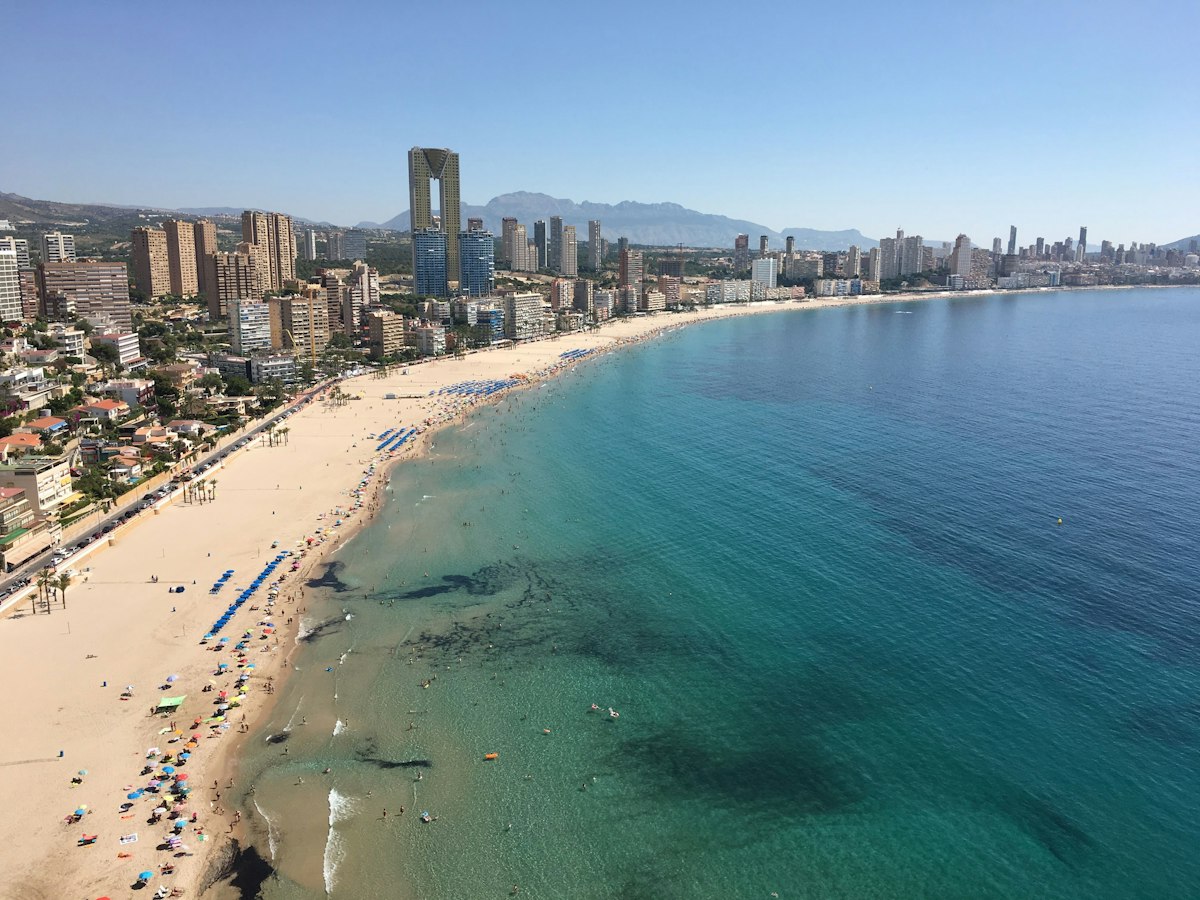
The Benidorm that ends up in tabloids and television programmes is essentially a single kilometre of the Playa de Levante strip — the cluster of high-rise hotels, bars, and karaoke venues on the east beach. That area absolutely exists and in peak summer it is exactly as advertised.
But Benidorm's urban footprint is considerably larger than that strip, and the majority of it bears little resemblance to the resort core.
The Casco Antiguo (old town) sits on a headland between the two beaches. It's a proper Spanish old quarter — narrow streets, local tapas bars, the church of San Jaime, elderly residents playing cards in the square. No English breakfast signs, no entertainment touts.
The Playa de Poniente on the west is calmer by design. Families, couples, a more mixed international crowd. The beach is long, the promenade pleasant, and the apartment buildings are residential rather than hotel-dominated.
Beyond the resort zone entirely, residential urbanisations — particularly around Rincon de Loix to the north — function as ordinary suburban neighbourhoods. Supermarkets, health centres, local restaurants, parks. The tourist strip might as well be in a different town.
This geography matters enormously when you're buying. A well-located apartment in Rincon de Loix and a front-line Levante hotel apartment are both "Benidorm property" — they are entirely different propositions.
Property Types and Price Ranges
Apartments dominate Benidorm's property stock. The town's famous skyline of high-rise towers is mainly apartment buildings, and the majority of foreign buyers purchase apartments rather than houses. Studios and one-beds are plentiful; two and three-bedroom apartments are the most common buyer target.
Bungalows and ground-floor apartments with gardens appear in the quieter urbanisations — Rincon de Loix and some hillside developments. These tend to appeal to buyers wanting outdoor space without maintaining a full villa.
Villas and townhouses exist but are a smaller part of the market — primarily in Sierra Cortina and outlying urbanisations. Private pool, more space, genuinely quiet.
Price ranges by area (2026):
- Rincon de Loix (northern residential): €1,400–€2,200/m²
- Playa de Levante area: €1,800–€3,000/m²
- Playa de Poniente / La Cala: €1,600–€2,600/m²
- Inland and hillside urbanisations: €1,200–€1,800/m²
- Sierra Cortina (golf, gated): €1,800–€2,800/m²
The Best Areas to Buy in Benidorm
Rincon de Loix
Rincon de Loix is the northern residential district of Benidorm, running from the northern end of the Levante beach up toward the Benidorm Palace entertainment complex and beyond. If there's a part of Benidorm where people actually live rather than holiday, this is it.
The area has a strong Scandinavian buyer base — Norwegian and Swedish buyers in particular have been purchasing here for decades, drawn by the combination of affordable prices, genuine year-round community, and relatively easy access to beaches without being in the tourist core.
Apartments here run €100,000–€220,000 for two bedrooms, with bungalows and ground-floor units with outdoor space ranging €160,000–€300,000. Community fees are typical for the area — budget €100–€200/month for a managed complex with pool.
This is the area we'd point year-round buyers toward first. The neighbourhood feels lived-in, has proper local services, and is unlikely to put guests through the Levante experience unless they actively seek it out.
Playa de Levante
Playa de Levante is the famous east beach — 1.8km of Blue Flag sand backed by the high-density hotel and apartment strip that defines Benidorm's international image. This is not where you buy if you want quiet.
What Levante does offer is the strongest short-term rental market in Benidorm. Apartments with sea views or within walking distance of the beach command premium occupancy in the April–October season. Two-bedroom apartments here range €150,000–€350,000 depending on floor, condition, and sea view.
If your primary goal is holiday rental yield and you accept the trade-off — that you're buying in a high-energy resort environment and will need to manage occupancy carefully — Levante has a case. If you want to retire here or use the property as a peaceful retreat, look elsewhere.
One critical note: tourist licence regulations in the Comunidad Valenciana have tightened significantly. In many apartment buildings, community approval is now required before a tourist licence can be obtained. Before buying any property with rental income in mind, verify the building's current position on tourist licences. Your solicitor should check this as standard due diligence.
Playa de Poniente
Playa de Poniente is the west beach, and the contrast with Levante is striking. The beach itself is slightly longer, west-facing (meaning afternoon sun), and noticeably calmer in atmosphere. The apartment buildings along and behind the Poniente promenade are a more residential mix — Spanish owners, long-term expat residents, families.
Two-bedroom apartments here run €140,000–€280,000. Sea views on higher floors command a meaningful premium. The area is genuinely walkable to Benidorm's old town and central amenities without sitting in the middle of the resort zone.
For year-round buyers who want beach access and a manageable lifestyle, Poniente is arguably the most balanced option in Benidorm — enough proximity to amenities, without the summer intensity of Levante.
La Cala
La Cala sits just north of Benidorm, between the town and Altea, and has a distinct character that makes it worth treating separately. It's a small coastal settlement with its own beach, its own bars and restaurants, and a pace that's noticeably more relaxed than central Benidorm.
Buyers drawn to La Cala typically want access to Benidorm's infrastructure — the airport proximity, the road links, the amenity base — without living in a resort. It works well as a year-round residential choice and as a holiday home for buyers who want a quieter base while keeping Benidorm's restaurants and beaches within easy reach.
Apartments here start from around €130,000 for a one-bed; two-beds in decent condition run €160,000–€240,000. The market is smaller and stock turns over less frequently, so patience is required.
Sierra Cortina
Sierra Cortina is a gated residential development on the hillside above Benidorm — elevated position, golf course, larger properties, and a noticeably different demographic to the resort core. It attracts buyers who want more space, privacy, and a greener setting while remaining 10 minutes from town.
Properties here tend toward townhouses, semi-detached villas, and detached villas rather than apartment blocks. The development has communal pools, landscaped grounds, and security. Prices run €250,000–€500,000, with larger villas above that.
This is Benidorm's closest equivalent to the gated urbanisation model common further north on the Costa Blanca. If you want a villa with private pool in a managed setting, Sierra Cortina is the obvious Benidorm option.
What Your Budget Actually Buys
At €200,000: A solid two-bedroom apartment in Rincon de Loix or Playa de Poniente in a complex with communal pool, ideally on a mid-to-upper floor for better views. Not front-line sea view at this budget — you're one or two streets back — but well within walking distance of the beach and in a genuinely liveable residential area. Community fees typically €100–€150/month.
At €350,000: Options open up considerably. Front-line Poniente with sea views, or an elevated apartment in Levante with genuine Mediterranean outlook. Alternatively, a Sierra Cortina townhouse with private garden and pool access, or a La Cala two-bed on a higher floor with views toward Altea. At this level you're choosing between sea-view apartment and villa-adjacent lifestyle rather than compromising on either.
At €500,000+: Large private villa in Sierra Cortina with private pool, or a premium Levante penthouse with wraparound terrace and front-line sea views. You're also starting to compete with what's available in Altea and Calpe for this budget — worth comparing the markets if lifestyle is the primary driver.
Rental Potential — Realistic Numbers
Benidorm delivers some of the strongest short-term rental yields on the Costa Blanca, underpinned by one of the highest occupancy rate environments in Spain. The resort infrastructure that creates the summer crowds also creates sustained rental demand from April through October, with reasonable shoulder season bookings in March and November.
Levante beach apartments with sea views: 5–8% gross annual yield in current conditions, based on realistic occupancy and market rates. These numbers require active management, professional photography, and platform optimisation — they don't happen passively.
Rincon de Loix and Poniente holiday rentals: typically 3–5% gross yield. Lower peak-season premiums than Levante, but also somewhat easier to manage and less exposed to regulatory friction from HOAs.
Long-term and winter rental demand is real and underappreciated. Rincon de Loix in particular has a sustained Scandinavian winter rental market — Norwegian and Swedish residents renting for three to six months during northern European winters. For buyers who don't want the full short-term rental management overhead, a well-positioned two-bed at a reasonable monthly rent from October to April is a legitimate alternative model.
Critical caveat: tourist licences in the Comunidad Valenciana are genuinely complicated now. New rules require community approval in multi-dwelling buildings, and many established buildings have voted to restrict or ban tourist lettings. Do not assume rental income before confirming the current licence status of the specific building you're buying in. This is non-negotiable due diligence. See our guide to renting out property in Spain for the full regulatory picture.
The Honest Downsides
Summer intensity. July and August in the resort core are genuinely intense — crowds, noise, traffic, heat. If you're planning to use your Benidorm property during peak summer, you need to be honest with yourself about whether you enjoy that environment or will spend two months trying to avoid your own town. Many full-time Benidorm residents simply adjust their rhythm and avoid the resort zone during peak season. That's a workable strategy, but it's worth knowing about in advance.
Parking and traffic. The town's infrastructure was not designed for the volume of vehicles it now handles. Parking in central areas is a problem, particularly in summer. Properties with private parking are meaningfully more liveable.
The reputation and resale. Some buyer profiles will simply not consider Benidorm on the basis of its image — it's an irrational filter, but it exists, and it can constrain your eventual resale market. The Scandinavian buyer base is large and active, but certain nationalities remain resistant regardless of the actual quality of the property. This isn't a dealbreaker, but it's worth factoring in if you're buying primarily as an investment.
Building quality variation. Benidorm has a large stock of older apartment buildings — some well-maintained, some not. Survey standards and community management quality vary enormously. A thorough independent survey and a careful review of community meeting minutes (which your solicitor can request) are not optional extras here — they're essential.
Tourist licence uncertainty. As noted above, the regulatory environment for short-term rentals has tightened. Anyone buying with rental income expectations needs to verify licence eligibility before committing.
Who Should Buy in Benidorm (and Who Shouldn't)
Benidorm is likely a good fit if:
You're primarily motivated by rental yield and want a market with proven occupancy. You're buying in the €100,000–€250,000 range and want genuine beachside access at a price that doesn't exist in Javea or Altea. You want to live year-round in a well-serviced town with a real permanent population and don't mind adjusting your lifestyle during August. You like the idea of a multi-season base — British winter in Spain, summer rental income — and can manage the licence requirements. You're comfortable with a Scandinavian-heavy expat community rather than a primarily British one.
Benidorm is probably not a good fit if:
You want a peaceful summer retreat. You're highly sensitive to the reputation risk affecting resale values. You're expecting passive rental income without doing the tourist licence due diligence properly. You want the upscale, quieter Costa Blanca Norte lifestyle that Altea, Javea, or Moraira deliver — at Benidorm's price point, the trade-off is real. You're buying with the assumption that Levante apartments automatically come with active rental permission — many do not.
Buying in Benidorm — What You Need to Know
The Spanish buying process applies in full here. The key steps:
NIE Number — required for all property transactions in Spain. Get this sorted early; it can take weeks. Full process in our NIE number Spain guide.
Independent solicitor — use an abogado who is genuinely independent of the selling agent. In Benidorm especially, where older stock is common, your solicitor should check planning permissions, building debts, community fee arrears, and tourist licence status. Budget 1–1.5% of purchase price for legal fees.
Buying costs — Spain's total purchase costs for a resale property typically run 10–12% on top of the purchase price (ITP transfer tax, notary, land registry, solicitor). See our buying costs in Spain guide for the full breakdown.
Mortgages — non-resident buyers can access Spanish mortgages, typically at 60–70% LTV. See our Spanish mortgage for non-residents guide for current conditions and what lenders require.
The full process — for a complete walkthrough of buying property in Spain from search to completion, see our buying property in Spain guide.
For broader Costa Blanca context and how Benidorm compares to other towns in the region, our Costa Blanca property guide covers the full picture.
Final Verdict
Benidorm's reputation does real work in keeping prices below where the fundamentals would otherwise place them. That's not a bug if you're buying with clear eyes — it's essentially a discount for ignoring the noise.
The buyers who do well here tend to be pragmatic: they buy in the right microarea (Rincon de Loix or Poniente rather than the Levante strip unless yield is the explicit goal), they do the due diligence on tourist licences before assuming rental income, they get a proper survey on older buildings, and they don't try to pretend they've bought somewhere else when they tell people where they live.
The buyers who struggle tend to have bought the headline rather than the reality — a Levante apartment on the assumption of rental income that the building's community rules don't permit, or a property they'd be embarrassed to mention socially.
Benidorm is a legitimate property market with genuine infrastructure, strong transport links, proven rental demand, and an entry point that the more glamorous parts of the Costa Blanca simply can't match. Whether it's the right market for you comes down to what you're actually trying to achieve — and whether you're comfortable making that call based on facts rather than reputation in either direction.
Ready to find your property in Spain?
Browse thousands of verified listings from licensed local agents.
Browse properties →