The towns on the western and northern shores of the Mar Menor occupy a strange position in the Spanish property market. They're not especially well-known outside of buyers who've done their homework on Murcia. They don't make the feature spreads in property magazines. And yet they have one of the most loyal repeat-buyer bases on the Costa Cálida — people who came once, loved the lagoon, and haven't seriously considered anywhere else since.
Los Alcázares, San Pedro del Pinatar, and Lo Pagán are the three main towns to understand. They're distinct, they attract slightly different buyers, and they sit in a landscape defined by the Mar Menor lagoon — Europe's largest saltwater lagoon and the defining feature of this entire corner of the coast.
This guide gives you an honest picture of each town, what the lagoon situation actually looks like in 2026, and who this market genuinely suits.
The Lagoon: Understanding the Mar Menor
Before talking towns and prices, let's deal with the lagoon directly, because every buyer considering this area will ask about it.
The Mar Menor is a 170 square kilometre saltwater lagoon separated from the open Mediterranean by La Manga del Mar Menor — a 21km sandbar. The lagoon is notably warmer than the sea (often 2–4°C above Mediterranean temperature), very shallow in places (maximum depth around 7 metres), and historically very calm. These characteristics made it a long-standing draw for families, older swimmers, and anyone who finds the open sea challenging.
In 2019 and 2021, the lagoon suffered serious algae blooms caused by agricultural runoff — particularly nitrate-rich water draining from intensive vegetable farming in the surrounding huertas. The images were bad. Fish died. The story went national and international. Property prices around the lagoon dipped, some sellers held off, and a section of the buyer market walked away.
Here is the position in mid-2026: recovery has been real and significant. Water quality has improved year-on-year since the worst episodes. The EU-backed recovery programme and the Spanish government's agricultural runoff restrictions have had measurable effect. The lagoon was busy with swimmers and watersports in summer 2024 and 2025, water quality monitoring data is publicly available and generally positive for most of the calendar year, and the "legal person" status granted to the lagoon in 2022 means it has ongoing legal protection that creates accountability for further degradation.
Is everything resolved? No. There are still pressure points — heavy rainfall events can cause runoff spikes, some seasonal fluctuation in water quality occurs, and the agricultural land use surrounding the lagoon hasn't been fundamentally restructured. Buyers should treat this as an ongoing situation to monitor, not a solved problem, but also not the crisis it was in 2019–2021.
The official Mar Menor monitoring data is published by Murcia's Institute of Water Research. Use it.
Los Alcázares
Los Alcázares is the most developed and best-connected of the lagoon towns. Sitting on the southwestern shore of the Mar Menor, it has a long promenade (Paseo de la Baronesa), a sandy beach on the lagoon, a reasonable selection of restaurants and bars, and all the services for year-round living.
It also has a strong cycling culture — the town has invested significantly in cycling infrastructure, and the flat terrain around the lagoon makes it a genuinely pleasant place to cycle year-round. This draws a specific type of buyer: active retirees, couples in their 50s and 60s who want to maintain fitness in Spain, and buyers who come specifically for the cycling routes.
The town has a permanent population of around 16,000, which is respectable — it doesn't empty out in winter to the same degree as some pure resort towns. There's a real community here.
Los Alcázares Property Prices
Apartments in complexes with pool: €90,000–€160,000 for two bedrooms. This is the most active market segment. Lagoon-facing apartments or those within easy walking distance of the promenade sit toward the top of this range.
Bungalows and townhouses: €130,000–€210,000. The urbanisations around Los Alcázares have significant bungalow stock — single-storey and split-level properties with private patios and communal gardens. Popular with buyers who want ground-floor living without stairs.
Detached villas: €180,000–€280,000. Less common than in some Murcia coastal towns, but available, particularly in the urbanisations slightly away from the town centre.
Frontline lagoon positions: Properties with direct lagoon frontage command a significant premium — 25–40% above equivalent non-frontline stock. These are rare and tend to sell quickly.
San Pedro del Pinatar
San Pedro del Pinatar sits at the northern end of the Mar Menor, where the lagoon narrows toward the salt flats and the channel connecting it to the Mediterranean. It's a larger town than Los Alcázares — a real municipality with a fishing fleet, a salt production industry, and a community that predates the foreign buyer market by centuries.
The salt flats at the northern tip (the Parque Regional de las Salinas y Arenales de San Pedro del Pinatar) are a protected natural area and a significant bird habitat. It's genuinely extraordinary — a functioning natural ecosystem within easy walking distance of the town. Flamingos are regular visitors.
San Pedro also has therapeutic mud — rich, dark salt-flat mud that draws health-tourism visitors who apply it before swimming. It's not unique to this area, but San Pedro has made more of it than most.
The town feels more authentically Spanish than some of the more resort-focused Mar Menor alternatives. The English-speaking expat community is present but proportionally smaller. For buyers who want to genuinely integrate into Spanish life rather than live within an expat bubble, San Pedro is appealing.
San Pedro del Pinatar Property Prices
Town-centre apartments: €85,000–€140,000 for two bedrooms. Good value relative to the town's quality of life. Many properties are older Spanish construction with good space-to-price ratios.
Bungalows on the northern urbanisations: €120,000–€190,000. Access to the salt flat park and lagoon is a genuine quality-of-life asset.
Villas: €160,000–€250,000. More available here than in Los Alcázares, particularly further from the lagoon.
Lo Pagán
Lo Pagán is technically a pedanía (district) of San Pedro del Pinatar, sitting immediately south of the town on the lagoon shore. It's worth distinguishing because it has a distinct character and a specific buyer following.
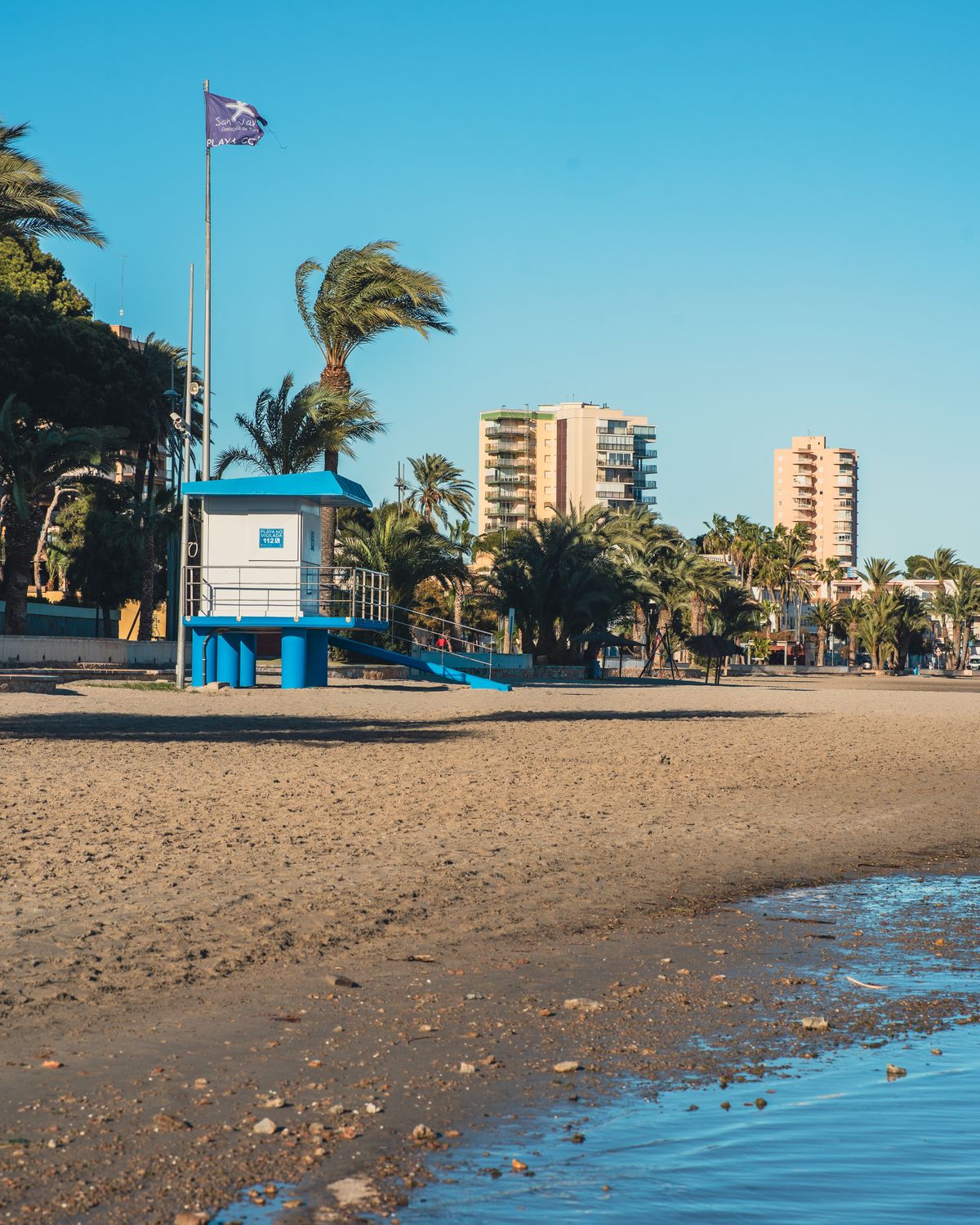
Lo Pagán has a promenade, a marina, a beach that runs directly along the lagoon, and a more resort-oriented atmosphere than San Pedro town proper. It's the Mar Menor's answer to a low-key beach resort — not remotely as developed as La Manga, but with a pleasant, lived-in feel and year-round residents.
The marina gives it a slightly more polished edge. There are good restaurants on the promenade. It's popular with Dutch, Belgian, and British buyers who want easy lagoon access without the intensity of La Manga del Mar Menor.
Lo Pagán Property Prices
Apartments: €100,000–€165,000 for two bedrooms. The promenade-facing and marina-adjacent positions carry a premium. Good value for the lagoon lifestyle on offer.
Bungalows: €130,000–€200,000. The area around Lo Pagán has a solid supply of bungalow-style properties on smaller urbanisations.
The Cycling Infrastructure: Worth Taking Seriously
This deserves its own mention because it's become a genuine draw. The flat terrain around the Mar Menor — the lagoon, the salt flats, the coastal routes — has been progressively connected by cycling infrastructure over the past decade. There's now a near-continuous cycling route around the lagoon, with connections into the wider Murcia cycling network.
Los Alcázares has positioned itself particularly around cycling, with bike hire, cycling-specific accommodation, and organised routes. For buyers who cycle seriously — whether road bikes or e-bikes — this is one of the few areas in Spain where you can genuinely incorporate daily cycling into your life without dealing with heavy traffic or steep terrain.
Watersports and the Lagoon's Unique Appeal
The lagoon's shallow, warm, calm water is genuinely unusual for what it enables. Windsurfing and kitesurfing are well-established on the lagoon — the conditions are reliable and the shallow depth makes falls significantly less dangerous than in open water. Kayaking, paddleboarding, and sailing are all popular. The lagoon's warmth extends the effective swimming season — many lagoon-side properties see guests swimming from late April to late October.
This is the core lifestyle proposition: access to warm, calm, safe water for an extended season, with the full Mediterranean coastline accessible via La Manga if you want it.
What to Watch Out For
Building age on the urbanisations. A significant proportion of the bungalow and apartment stock around these towns dates from the 1980s and 1990s. Many properties have been well maintained; many haven't. Never skip a building survey on older properties here. Check community reserve funds before buying into any complex.
Community fee transparency. Always request the last three years of community accounts. Some older communities have significant outstanding repair bills or inadequate reserves. This is not a reason to avoid older stock — it's a reason to investigate before you commit.
The lagoon's variable status. We've addressed this above, but it deserves repeating as a practical buyer note: if you're purchasing primarily for lagoon swimming access, check current water quality data for the specific time of year you intend to use the property. Seasonal fluctuation is real.
Rental licence requirements. Murcia's Vivienda Turística licence is required for any short-term rental activity. Applications go through the regional government. Obtain this before marketing, not after.
Who This Market Suits
The Mar Menor villages attract a coherent buyer type: people who want a calm, outdoor, active lifestyle in Spain at a price that doesn't require a large budget or a pension sacrifice. The lagoon is the draw. Cycling, swimming, water sports, and a gentle year-round pace are what's on offer.
Specific buyers who tend to thrive here:
Active retirees who want excellent cycling infrastructure, warm-water swimming for an extended season, and a year-round community rather than a ghost-town winter.
Families with young children who value the lagoon's safety and calm over the open sea. The shallow, warm, wave-free water is genuinely different from anything you get on most Spanish coasts.
Buyers who want year-round use without peak-season crowds. The Mar Menor towns are busy in summer but liveable year-round in a way that pure resort towns often aren't.
Budget-conscious buyers who want a quality coastal lifestyle without paying Costa Blanca or Costa del Sol prices. The value here is genuine.
Buying Costs in Murcia
Buying costs in Murcia run to approximately 10–12% on top of the purchase price. Transfer tax (ITP) is 7.75% — lower than Alicante's 10% — plus notary, registry, and legal fees. See our complete guide to buying costs in Spain for a full regional breakdown.
Bottom Line
Los Alcázares, San Pedro del Pinatar, and Lo Pagán offer something the rest of the Costa Cálida doesn't: direct access to the Mar Menor lagoon and the lifestyle that comes with it. The Mar Menor's recovery from its 2019–2021 lows is real and ongoing. The towns are genuinely liveable year-round. And the prices — apartments from under €100,000, bungalows from €130,000 — represent meaningful value for what you get.
The lagoon situation requires an eyes-open approach: monitor the data, understand the ongoing environmental pressures, and don't treat the recovery as permanent without continued attention. But for buyers who do their homework and align their expectations to what these towns actually offer, this is one of the most rewarding corners of the Costa Cálida.
See the full Costa Cálida guide for how these towns fit into the broader Murcia property picture, or compare with La Manga if you want lagoon access with a more resort-oriented environment.
---
*Property prices current as of Q2 2026. Always verify current tax rates and rental regulations with a qualified Spanish abogado. This guide is for informational purposes only.*
---
Search available properties in Los Alcázares and the Mar Menor — or explore the Murcia regional guide for a broader view of the Costa Cálida market.
Ready to find your property in Spain?
Browse thousands of verified listings from licensed local agents.
Browse properties →