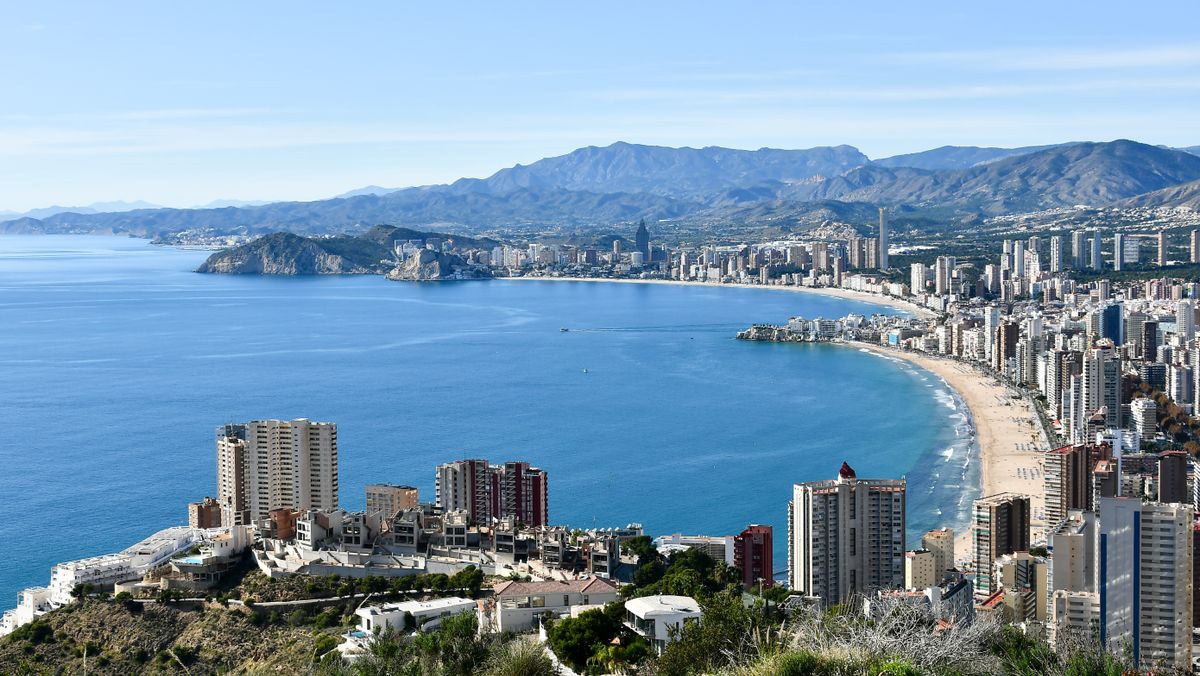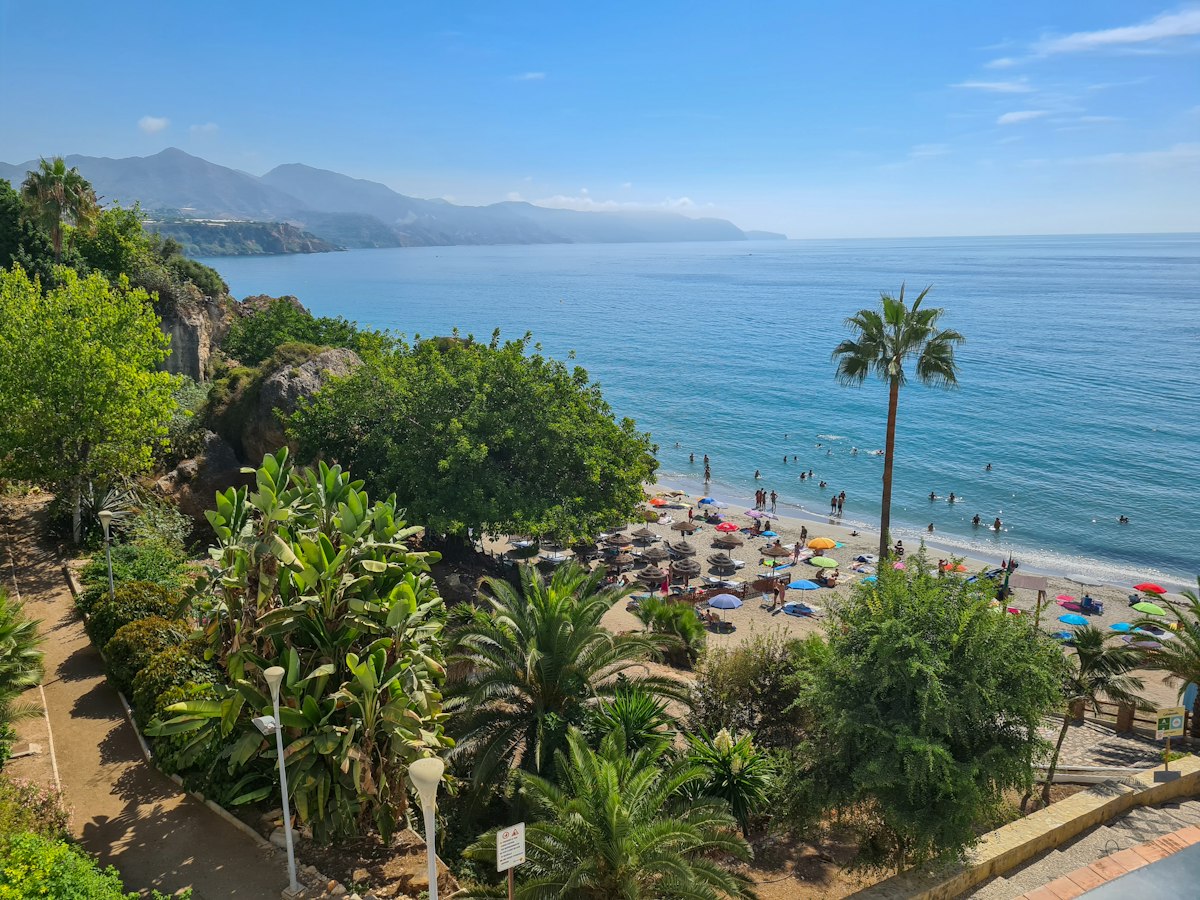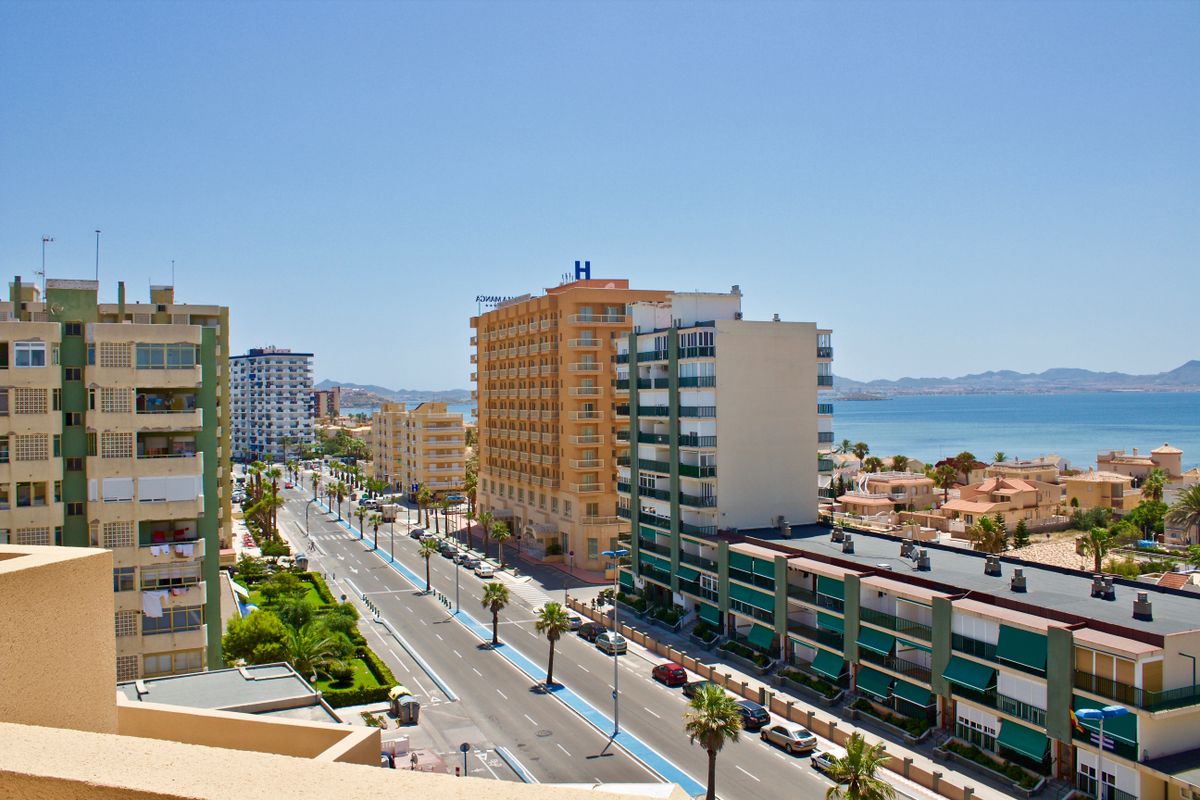
La Manga del Mar Menor is one of those places you either immediately get or completely dismiss. A narrow strip of land — 21 kilometres long, no more than a few hundred metres wide — jutting out from the Murcia coast and separating the Mediterranean from the Mar Menor lagoon. Apartments on both sides of the water. Golf on your doorstep. Beaches you can walk to in under two minutes from almost anywhere on the strip.
It's not conventionally pretty. It's dense. In peak summer it's heaving. But it has a loyal buyer base, prices that remain genuinely competitive, and a lifestyle offer that works exceptionally well for a specific kind of buyer.
This is the honest guide — what La Manga actually is, what you pay, what works, and what doesn't.
What La Manga Is (And Isn't)
La Manga is a 21km coastal spit formed by natural sandbars. To the east is the open Mediterranean. To the west is the Mar Menor — Europe's largest saltwater lagoon, roughly 170 square kilometres of warm, shallow water that sits a few degrees warmer than the sea and almost never has waves. The lagoon side is where most of the appeal lies for families, older buyers, and anyone who wants to swim without fighting waves or strong currents.
The strip itself is heavily built up. Apartment blocks are the dominant property type — some from the 1970s and 80s, others more recent. This is not a place for buyers who want a villa with a private garden. If you want that, look at Puerto de Mazarrón or Los Alcázares instead.
What La Manga gives you: direct access to two different swimming environments from the same property, a genuine resort infrastructure with bars, restaurants, and supermarkets along the strip, and La Manga Club — one of Spain's most recognised golf and sports resorts — right on your doorstep.
What it doesn't give you: quiet, space, or a particularly authentic Spanish experience. La Manga is a resort. Own that or don't buy here.
La Manga Club: The Other La Manga
It's worth separating two distinct markets that share the name.
La Manga del Mar Menor (the strip): the dense apartment zone described above. Mostly resale stock from the 70s through to the 2010s. Prices are accessible.
La Manga Club Resort: a 1,400-acre self-contained luxury resort about 10km from the strip. Three golf courses (including the internationally rated South Course), a five-star hotel, tennis academy, spa, football pitches used by professional teams for pre-season, and residential properties — apartments, townhouses, and villas — spread across manicured grounds.
La Manga Club is a completely different proposition. It's managed, gated, and comes with annual fees that can run to €3,000–€5,000+ per year depending on property size and membership level. Property prices reflect the premium: apartments from €200,000–€350,000, townhouses from €300,000, and detached villas from €500,000+. If that's your market, it's worth its own detailed research — See our dedicated La Manga Club & golf resort guide for the full picture, including fees, rental rules, and which residential zones work best.
For this guide, we'll focus on the strip, where most buyers are looking.
Property Prices on La Manga Strip
The strip runs from Gran Via de La Manga in the south to the Punta de la Barra in the north. Prices vary by position, age, and whether you're facing the Mediterranean, the lagoon, or neither.
Studio and one-bedroom apartments: €80,000–€120,000 for older stock in reasonable condition. You can find well-located units with sea or lagoon views in this range if you're patient.
Two-bedroom apartments: €110,000–€180,000. The sweet spot for most buyers. Expect older block construction, communal pools, and balconies rather than terraces. Community fees of €100–€200/month are standard.
Three-bedroom apartments and larger: €160,000–€250,000. Top-floor or penthouse positions with panoramic views over both the lagoon and the Mediterranean can approach and exceed this range. These represent strong long-term value if you're buying to hold.
Frontline positions: Lagoon-front and seafront properties carry a 20–35% premium over equivalent inland-facing units in the same block.
The market is predominantly resale. New builds on the strip are rare — there simply isn't much available land. What new development there is tends to cluster at the southern end near Gran Via.
The Rental Picture: Honest Numbers
La Manga has solid summer rental demand. Families in particular are drawn to the lagoon's calm water, and the resort infrastructure means there's enough to do that holidaymakers stay for a week rather than a night. July and August occupancy rates for well-presented properties listed on major platforms can hit 90%+.
The problem is seasonality. Outside of June–September, occupancy drops sharply. The strip itself quietens significantly in winter — some bars and restaurants close, the energy dissipates. If your rental income model requires year-round occupancy, La Manga is not the right answer. If you're targeting 8–10 peak weeks a year to cover costs, it can work.
On approximate rental yields: a well-managed two-bedroom apartment generating €800–€1,000 per week in July–August and decent bookings in June and September can gross €12,000–€18,000 per year. Against a €150,000 purchase price, that's a gross yield in the region of 8–12% at the top end — before fees, costs, and licence requirements. See our Murcia rental income guide for a full area-by-area yield comparison and honest net return calculations.
You'll need a Vivienda Turística rental licence. Murcia's regional government issues these, and enforcement has tightened. Factor the licence into your purchase timeline — it's not instant.
The Mar Menor: The Elephant in the Room
Any honest guide to La Manga has to address the Mar Menor's environmental situation.
In 2019 and again in 2021, the lagoon experienced severe algae blooms driven by agricultural runoff from the surrounding farming hinterland — high nitrate concentrations from intensive vegetable farming. The images were alarming: dead fish, green water, national news coverage. Property prices on the strip dipped. Some buyers walked away.
Here's the current picture, as of mid-2026: the lagoon has recovered significantly. Water quality has improved materially since the blooms. Spain's Ministry for Ecological Transition has an ongoing Mar Menor recovery plan with reduced agricultural runoff targets. The EU declared the lagoon a legal person in 2022 — a first for a body of water in Europe — which gives it specific legal protections.
Is it fully recovered? Not entirely. Water quality fluctuates seasonally. There are still environmental pressures from agricultural land use that haven't been fully resolved. The honest position is: the lagoon is significantly better than it was in 2019–2021, recovery is ongoing and legally backed, but it remains a variable that buyers should monitor rather than ignore.
This should inform your research, but it shouldn't be a deal-breaker. The tens of thousands of people who swam in the Mar Menor in summer 2024 and 2025 without incident is evidence that conditions have markedly improved. Follow the monitoring data at miteco.gob.es and make your own assessment.
What Buyers Get Wrong About La Manga
Assuming all apartments are the same. The age and condition range on the strip is enormous. A 1975-built apartment with original fittings is a very different proposition from a 2010 renovation with modern kitchen and bathrooms. Do viewings, don't buy off photos.
Underestimating community fees and building age. Older blocks on the strip can have significant deferred maintenance. Ask for the last three years of community minutes, check the reserve fund, and budget for potential special assessments — particularly on blocks built before 1985.
Ignoring orientation. West-facing apartments on the lagoon side catch afternoon sun and lagoon views. East-facing on the Mediterranean side get morning sun and sea views. Which matters to you depends entirely on how you'll use the property. Neither is categorically better — but don't discover your preference after you've bought.
Expecting year-round life. La Manga is a summer place. If you're planning to use your property from October to April, be clear-eyed that the strip will be quiet. Not dead — there are year-round residents — but quieter than you might expect from a summer visit.
Practicalities: Getting There, Getting Around
Murcia International Airport (Corvera) is approximately 40 minutes from La Manga, with direct routes from London Stansted, Manchester, Birmingham, and Dublin. Alicante is about 90 minutes north.
On the strip itself, a car is useful but not essential in summer — there are regular bus services along the length of La Manga. Off-season, a car becomes more or less necessary if you want to access services beyond the strip.
For buying costs and the legal process, see our Costa Cálida buying guide. Murcia's ITP rate of 7.75% is lower than the 10% applied on the Costa Blanca — a genuine saving on most purchases here.
Who Should Buy in La Manga?
La Manga works well for a specific buyer profile:
Families with young children who want calm, warm, safe lagoon swimming alongside a proper beach on the other side. The dual water access is genuinely unique.
Buyers focused on summer rental income who want to maximise July–August occupancy in a resort environment with strong demand.
Golf buyers who want affordable accommodation near La Manga Club without paying resort prices. Living on the strip and using the club on a pay-as-you-play basis is a viable and significantly cheaper option than buying at the club itself.
Value-focused buyers looking for price points that have largely held during market uncertainty, with potential upside if the Mar Menor's recovery continues to attract positive attention.
La Manga is not for buyers who want quiet, privacy, authenticity, or year-round resort buzz. It's a summer destination that's excellent at what it does — and honest buyers should want to buy it for exactly that reason.
Bottom Line
La Manga del Mar Menor offers real value in an unusual package. Prices from €80,000 for a functional one-bedroom with pool access and 30 seconds' walk to the lagoon are hard to replicate anywhere on the Spanish coast. The environmental situation with the Mar Menor is real but improving. The seasonality is genuine but manageable if you price it into your income model.
If you want a low-cost entry to the Spanish coast with strong summer rental fundamentals, La Manga deserves serious consideration. If you want a year-round lifestyle property with privacy and space, look elsewhere in the Costa Cálida. At the southern end of the strip, Cabo de Palos offers a quieter, scarcer market with marine reserve access — worth comparing if budget stretches to €180,000+.
---
*Property prices current as of Q2 2026. Always confirm current figures and rental licence requirements with a qualified Spanish abogado. This guide is for informational purposes and does not constitute legal or financial advice.*
---
Interested in La Manga? Search available properties on the strip and surrounding area — or explore the full Murcia region guide for context on what your budget gets you across the Costa Cálida.
Ready to find your property in Spain?
Browse thousands of verified listings from licensed local agents.
Browse properties →