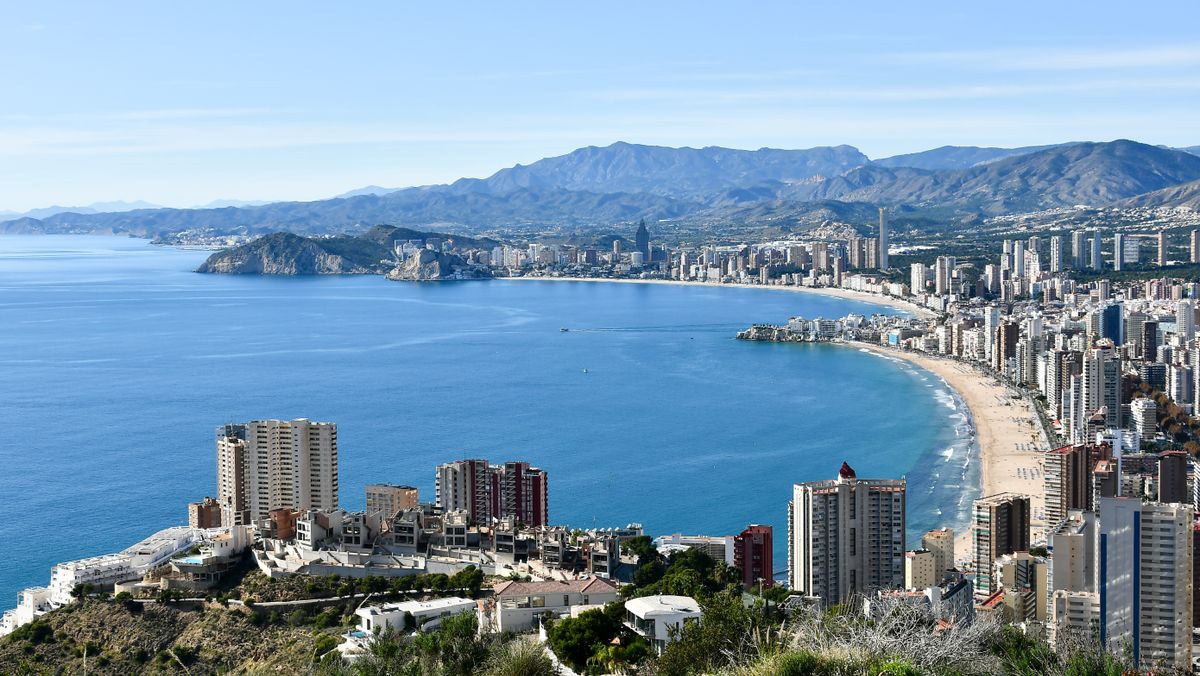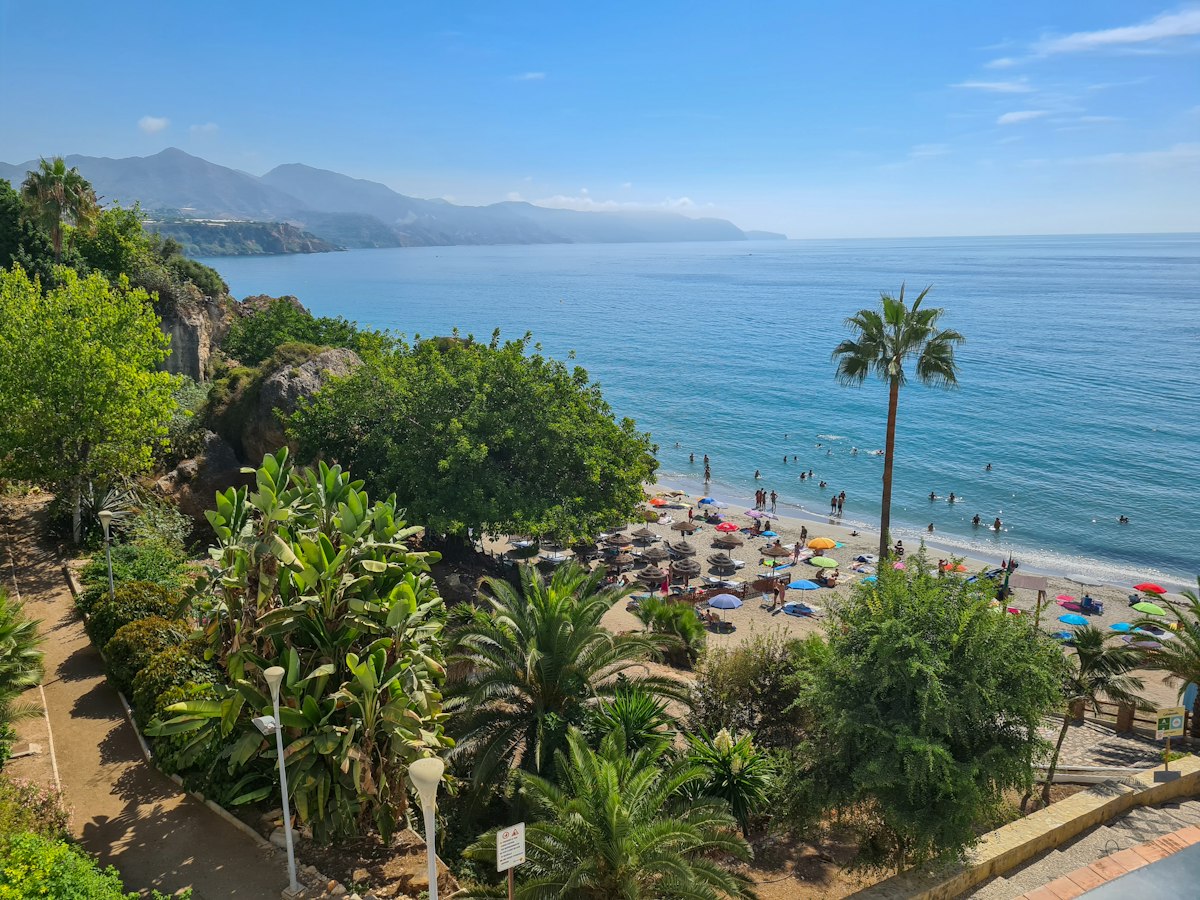
The overwhelming majority of UK buyers looking at Murcia head straight for the coast. La Manga, Mazarrón, the Mar Menor lagoon towns — the coastal resort logic is familiar and easy to follow. Buy near the beach, spend summers there, rent it out, sell when the time comes.
A smaller and growing number of buyers are doing something different. They're looking at Cartagena and Murcia city — the two main urban centres of the region — and finding something that the coastal market increasingly struggles to offer: low prices, genuine cultural depth, and the kind of urban life that doesn't disappear in October when the beach season ends.
This guide makes the case for city property in Murcia, honestly and without overselling it.
Cartagena: Spain's Most Underrated City
Start with Cartagena, because it's the more compelling of the two for foreign buyers and the less known outside of Spain.
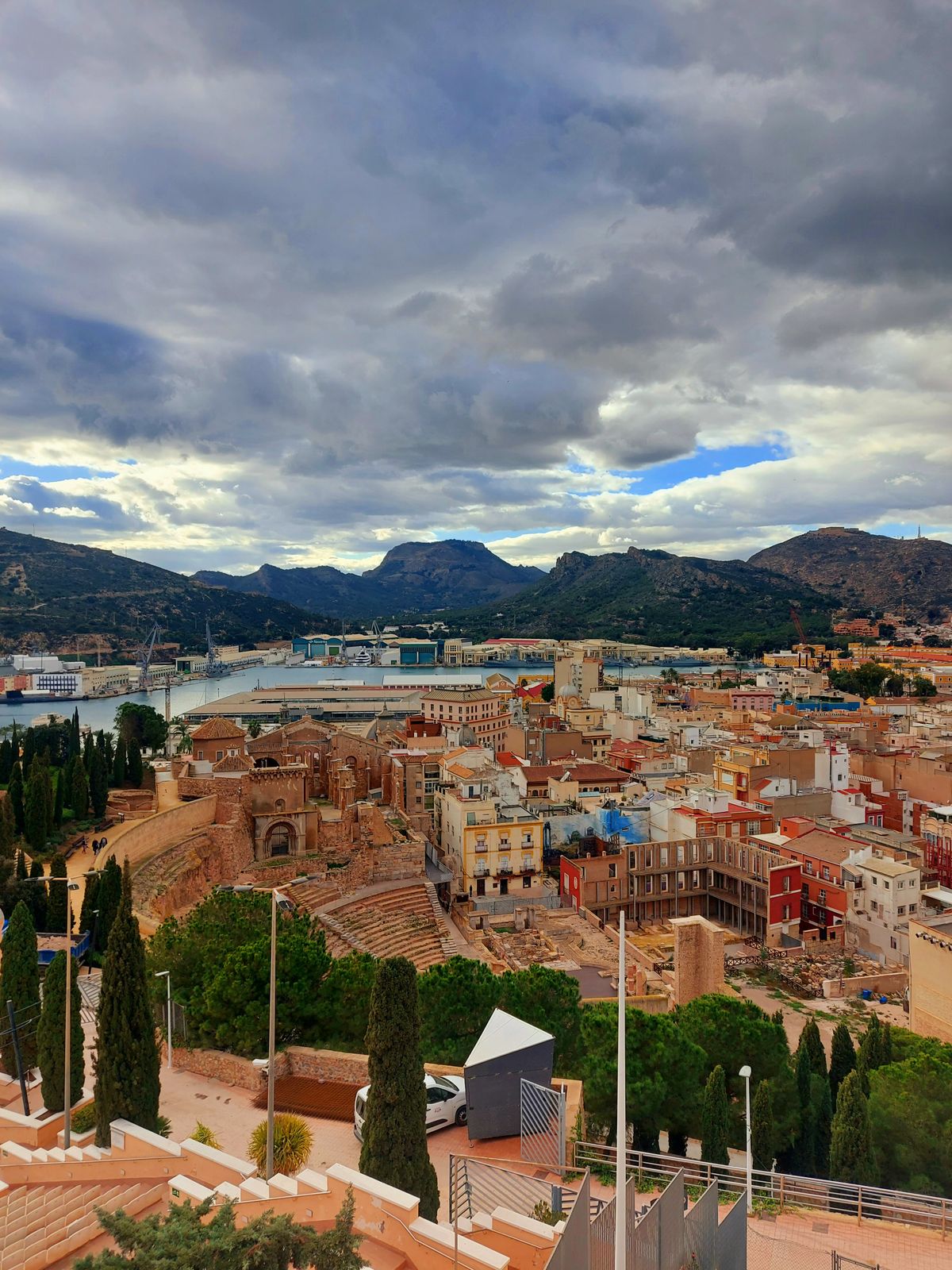
Cartagena has 3,000 years of continuous history. Carthaginian foundation, Roman conquest and expansion, Moorish rule, Reconquista, 19th-century naval and industrial power — the layers are visible in the city in a way that's rare even in Spain. The Roman theatre, uncovered during 1988 excavations and now a major museum, is genuinely on a par with anything in Mérida or Rome. There's a Carthaginian heritage museum, multiple Roman ruins integrated into the urban fabric, a spectacular natural harbour that's been strategic for every civilisation that held it, and a hilltop castle (Castillo de la Concepción) with views that explain immediately why everyone wanted to control this port.
The city proper has a population of around 215,000 — enough to be a real urban centre with functioning culture, restaurants, nightlife, and a University of Cartagena that brings youth and energy. It's not a tourist resort with a thin residential population; it's a real Spanish city that tourists are only recently discovering at scale.
Tourism Growth and What It Means for Property
Cartagena has seen significant tourism growth over the past five years. Cruise ship arrivals have increased substantially — the port receives multiple large vessels per week during the tourist season, and the city has invested in the museum infrastructure and old-town restoration to make itself worthy of them.
This matters for property buyers because it's a leading indicator of what happens to values when a city pivots from unknown to visited. The same story played out in cities like Tarragona, Cádiz, and Cartagena's Andalucían neighbour Almería over the past decade — early buyers in undervalued urban stock captured meaningful capital appreciation as tourism grew and gentrification followed.
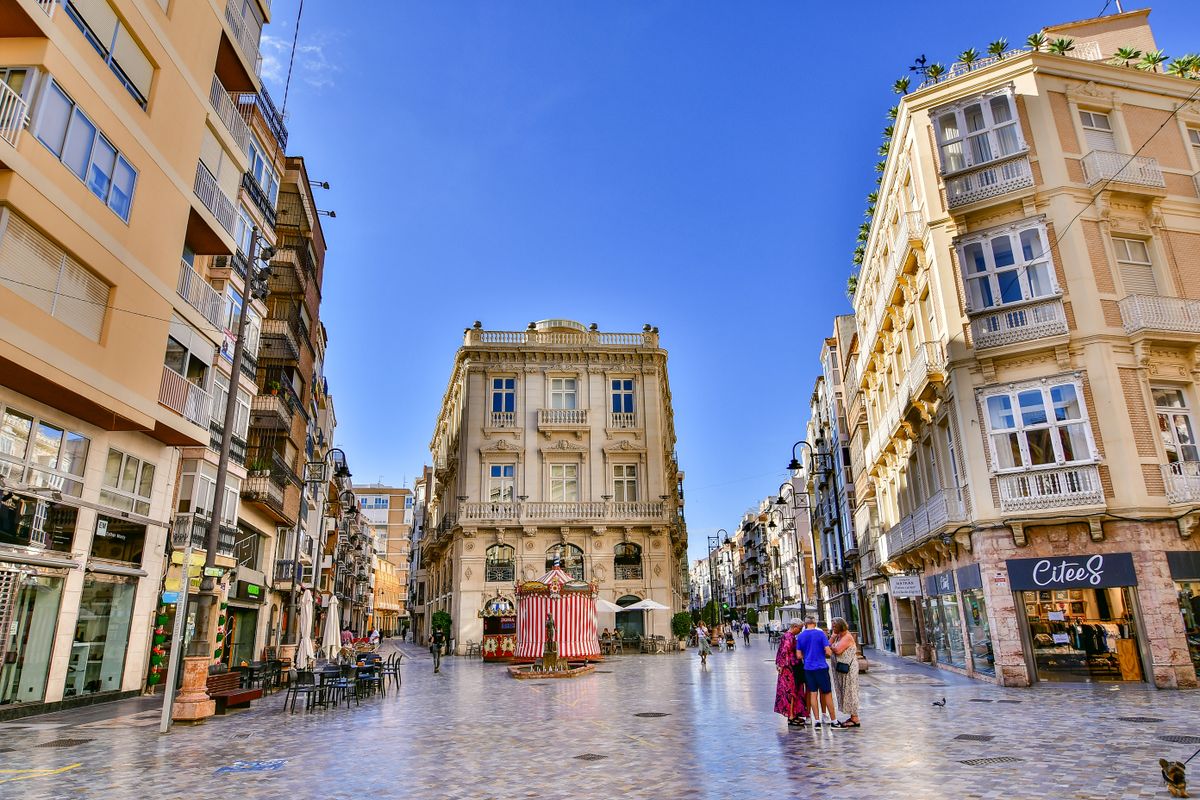
Cartagena is at an earlier stage of that curve than those examples. The waterfront and immediate old town have improved significantly. Specific neighbourhoods — the area around the Roman theatre, the Barrio del Foro Romano, the waterfront promenade — have had real investment. But secondary streets behind the main tourist zones remain gritty and unrenovated. This is not a finished product, and prices reflect that.
Cartagena Property Prices
City centre apartments in older buildings: €60,000–€130,000 for one and two bedrooms. This is the core of the Cartagena market for value buyers. Older Spanish apartment buildings, some recently renovated, some needing work. The spread in condition is wide — a refurbished flat in a maintained building at €130,000 is a different proposition from a project in a deferred-maintenance block at €70,000.
Renovated apartments in the historic centre: €120,000–€200,000. Properties that have been properly modernised in desirable locations near the Roman theatre, waterfront, and old-town core. These represent the gentrification upside — there's a reasonable case that these properties are still underpriced relative to equivalent historic-centre properties in Spanish cities of similar cultural weight.
Larger format apartments and penthouses: €180,000–€300,000. The upper end of the Cartagena market is growing as the city attracts buyers who want quality urban living at a price point that's impossible in Barcelona, Valencia, or Alicante city.
New developments: Limited but present, particularly in redevelopment zones near the waterfront. Prices €2,000–€2,800/sqm for new build, which is low by comparison with other Spanish city markets.
Rural and periurban properties: The countryside around Cartagena offers fincas and village houses from €80,000–€200,000, often with significant land and potential. The Cartagena interior — Campo de Cartagena — is agricultural and working, not tourist-polished, but accessible.
The City vs Coast Price Differential
This is the number that makes Cartagena interesting for buyers who do the comparison.
A two-bedroom apartment in reasonable condition 10 minutes' walk from the beach at Puerto de Mazarrón: €110,000–€150,000.
A two-bedroom apartment in reasonable condition in Cartagena's historic centre, walking distance from the Roman theatre, the harbour, and a dozen good restaurants: €90,000–€140,000.
The coast isn't more expensive because it offers more objectively. It's more expensive because it's been marketed more. The coastal property premium is largely a function of buyer familiarity, not underlying value superiority. For buyers who can use a city property — who will actually live there year-round, or who see tourism growth as the driver of capital appreciation rather than beach-season rental income — the city math is compelling.
Murcia City: The Regional Capital
Murcia city is the regional capital, with a population of around 460,000 — the seventh largest city in Spain. It has a beautiful Baroque cathedral, a good university with 35,000+ students, a serious restaurant scene, and the Segura River running through the centre of a genuinely attractive urban environment.
Murcia city is not particularly on the radar for holiday home buyers, and that's appropriate — it's 70km from the coast and not a place most people want as a seasonal property. But for buyers considering Spain as a place to live, particularly those looking at remote work or retirement with urban needs, Murcia city deserves assessment.
Why Murcia City Is Worth Considering
The cost of living in Murcia city is significantly lower than Valencia, Alicante, or any of the major Spanish coastal cities. Rents are affordable, restaurants are cheap, and the standard of daily life — food markets, culture, transport, healthcare — is genuinely good.
The city has two universities, good hospital facilities (the Hospital Universitario Virgen de la Arrixaca is one of the region's principal facilities), and a functioning economy built around agriculture, services, and public sector employment. It's not dependent on tourism, which means it has year-round stability that coastal towns lack.
Property prices in Murcia city are low by Spanish urban standards:
City centre apartments (Barrio del Carmen, Centro, Barrio Universitario): €80,000–€160,000 for two bedrooms. The student and young professional market creates decent long-term rental demand — yields of 5–7% are achievable for well-located units.
Higher-end and newer developments: €160,000–€280,000 for larger or better-specified apartments in sought-after locations.
Townhouses in the older city fabric: €100,000–€200,000.
For buy-to-let investors, Murcia city offers something the coastal market largely doesn't: year-round rental demand that doesn't depend on tourist season. Students, university staff, healthcare workers, and a young professional population all generate consistent demand.
Who Actually Buys in Cartagena and Murcia City?
It's worth being clear about who the actual buyer pool is here, rather than who you might imagine it would be.
Long-term residents and semi-permanent residents. Retirees or remote workers who want to live in Spain year-round and value culture, urban amenity, and a real Spanish life over beach proximity. Cartagena in particular suits this buyer very well. For retirees considering the full move, our retiring to Murcia guide covers residency, healthcare, and cost of living in detail.
Buy-to-let investors targeting long-term rentals. Murcia city's student and professional rental market is solid and year-round. Cartagena's growing tourism economy is generating short-term rental demand around the city centre. Both offer yield profiles that compare well with coastal alternatives.
Buyers making a capital appreciation bet. Cartagena is still in the early stages of its tourism and gentrification trajectory. Buyers who believe the city will continue on its current trajectory — more cruise visitors, more museum investment, more regeneration of the historic centre — are buying now at prices that haven't yet priced in where the city is heading.
Buyers who want both. Cartagena is 45 minutes from La Manga, an hour from the Mar Menor towns, and within range of multiple Costa Cálida beaches. A city apartment here as a primary or semi-permanent base, with day trips to the coast, is entirely viable. You're not choosing city over coast in a binary sense.
The Underrated Argument for Cartagena Specifically
Here's the honest bull case: Cartagena has the bones of a significant heritage tourism destination, is investing in the infrastructure to become one, and is priced as if it's still the underperforming industrial port city it was 20 years ago.
The Roman theatre alone — a first-century BC structure discovered by accident during construction work in the late 1980s and now a world-class museum — is the kind of anchor attraction that changes a city's trajectory. The Carthaginians and Romans exhibition infrastructure, the annual CARTHAGINESES Y ROMANOS festival that draws 40,000+ visitors, the cruise tourism growth — these are not minor indicators.
The honest counterargument: Spanish city gentrification takes longer than buyers expect. Neighbourhood regeneration in secondary cities happens in uneven, unpredictable bursts. Cartagena is not Valencia. The timeline for the capital appreciation thesis to play out could be 10 years or longer. This is not a quick flip — it's a long-hold bet on a city finding its level.
If that fits your investment horizon, Cartagena at current prices looks like a genuinely interesting entry point.
Practical Considerations
Getting there. Murcia International Airport (Corvera) is about 30 minutes from Cartagena and 30-40 minutes from Murcia city. Alicante Airport is approximately 90 minutes from Cartagena. Access is reasonable without being exceptional.
Healthcare. Both cities have good hospital facilities. Murcia city's university hospital and Cartagena's Hospital Santa María del Rosell are well-regarded. This is an advantage over smaller coastal towns where serious medical care requires a longer drive.
Language. Both cities are primarily Spanish-speaking communities with significantly lower English language prevalence than coastal resorts. If you're planning to use either city as a primary residence, functional Spanish will make your life considerably better. If you're a buy-to-let investor managing remotely, this is less of an issue.
Buying costs. Same Murcia ITP of 7.75% applies. See our full buying costs guide for the complete picture. The Costa Cálida regional guide covers the broader buying process in Murcia.
Bottom Line
Cartagena and Murcia city are not for every buyer. If you want beach access, a resort community, and summer rental income as the primary driver, look at the coastal towns. The Mar Menor villages, La Manga, and Mazarrón are all better fits for that profile.
But if you want city life, cultural depth, year-round livability, and prices that haven't yet caught up with where the demand trajectory is pointing — particularly in Cartagena — there's a real case here that not enough UK buyers are making.
City property in Murcia at €60,000–€180,000 for a liveable apartment in an interesting urban environment, 30 minutes from an airport and 45 minutes from the coast, is a different kind of value proposition from the standard coastal buy. It's worth thinking about seriously before defaulting to another beach apartment in a complex with a pool.
---
*Property prices current as of Q2 2026. Urban property markets can shift more quickly than resort markets — always verify current figures with a qualified local estate agent and Spanish abogado. This guide is for informational purposes only.*
---
Interested in Cartagena or Murcia city? Search available properties in both urban markets — or read the full Costa Cálida guide to understand how city property fits alongside the coastal options.
Ready to find your property in Spain?
Browse thousands of verified listings from licensed local agents.
Browse properties →