Retiring to Spain from the UK used to be one of the more straightforward life decisions a British person could make. Buy a property, register as an EU resident, use the European Health Insurance Card, live in the sun. Post-Brexit, the mechanics have changed considerably. The Spanish sunshine hasn't.
Murcia — specifically the towns around the Mar Menor, the golf resorts, and the coastal villages of the Costa Cálida — draws a significant number of UK retirees each year. This guide covers what you actually need to know: residency rules, healthcare access, cost of living, social infrastructure, and which areas make most sense for retirement living. No glossing over the post-Brexit complications.
Post-Brexit Residency: Your Main Options
If you weren't already legally resident in Spain before 31 December 2020 (and registered under the Withdrawal Agreement), you don't have an automatic right to live in Spain long-term. You're now a third-country national, and you need a visa or residence permit.
For retirees, the primary route is the Non-Lucrative Visa (NLV).
Non-Lucrative Visa: What It Is
The NLV is Spain's route for people who want to live in Spain without working. It requires you to demonstrate sufficient income to support yourself — currently set at approximately €2,400/month for a single person (around €28,800/year), with additional requirements for dependants. This figure is calculated from the Spanish Public Income Indicator (IPREM) and is adjusted periodically.
The income can come from pensions (state and private), rental income, investments, or savings. You don't need to be receiving a salary — in fact, working in Spain while on an NLV is not permitted. If you intend to do any paid work, you need a different visa category.
What the process involves:
- Apply at the Spanish Consulate in the UK (London, Edinburgh, or Manchester depending on your region of residence)
- Provide proof of income/assets, a clean criminal record certificate, a medical certificate, valid passport, and health insurance covering Spain
- Processing time is typically 1–3 months
- The initial visa is granted for one year; you then apply for renewal in Spain (2 years, then 2 years again)
- After five years of continuous legal residence, you can apply for long-term EU residence; after ten years, Spanish nationality becomes possible
The NLV is not the only route. Some retirees use the Golden Visa (property purchase of €500,000+), which is a different product with different implications — see our Spain Golden Visa guide for detail. There is also a Digital Nomad Visa that allows remote work, but retirees are generally looking at the NLV.
Practical NLV Notes for Murcia Retirees
Getting the NLV sorted before you move is essential — don't arrive planning to sort it out once you're there. The Spanish consulate in the UK processes these, and appointment availability fluctuates.
Once you have residency, you register on the Padrón Municipal (local register) at the town hall. This is a separate process from the residency visa but important for accessing local services, healthcare registration, and eventually applying for the TIE (Tarjeta de Identidad de Extranjero — your residency card).
Healthcare: The Three-Layer Reality
Healthcare access is the most frequently misunderstood aspect of retiring to Spain from the UK post-Brexit. Here's how it actually works.
Private Health Insurance (the NLV requirement)
For the first year or more of your Spanish residency, you'll be using private health insurance. The NLV requires it, and it's your primary healthcare access until you achieve legal resident status and meet the conditions for public healthcare.
Private health insurance in Spain for a healthy 60-year-old typically costs €80–€120/month. For a 65-year-old, expect €100–€150/month. For 70+, the range widens significantly — €150–€250/month is common, more if you have pre-existing conditions. Some insurers exclude certain conditions from coverage.
Major private health providers with good English-language service in the Murcia region include Sanitas, Adeslas, and Asisa. Compare several before committing — coverage, hospital networks, and exclusions vary.
In the Murcia region, the main private hospital network is Quirónsalud, with facilities in Murcia city and Cartagena. Hospital Los Arcos del Mar Menor in San Javier provides some private patient services alongside its public function.
Access to Spanish Public Healthcare
Once you establish legal residence in Spain and register on the Padrón Municipal, conditions for accessing the public healthcare system (Sistema Nacional de Salud, SNS) depend on your situation.
State pensioners: UK pensioners receiving a UK State Pension can be covered for Spanish public healthcare via the S1 form — a certificate from the UK's NHS Business Services Authority that transfers healthcare responsibility to Spain. This is one of the Withdrawal Agreement benefits that remains in place under current post-Brexit arrangements. If you receive a UK State Pension, get the S1 form before you leave — it significantly changes your healthcare access and costs.
Pre-retirement age (under state pension age): You're relying on private insurance until you either reach pension age or meet Spanish contributory requirements. This is the gap that catches some buyers.
The honest picture: Healthcare access in Spain is generally excellent once you're in the system. Public hospital quality in Murcia is good. Wait times are longer than UK private healthcare but comparable to or better than NHS. The private system plugs the gaps. Most established UK retirees in Murcia run a combination: private insurance for day-to-day and elective, public for serious illness and emergencies.
IMSERSO: Social Care for Older Residents
IMSERSO is Spain's national social care system. Once legally resident, older adults can access subsidised residential care facilities, home care support, and the famous IMSERSO holiday programme — subsidised travel and holidays for pensioners that's become something of a cultural institution. It's not relevant to the initial buying decision but worth knowing exists as a longer-term benefit of Spanish residency.
Cost of Living in Murcia vs the UK
This is where Murcia genuinely wins. The cost differential between living in Murcia and living in most of the UK is substantial.
Groceries: Spanish supermarkets (Mercadona is the dominant chain in Murcia) are cheaper than UK equivalents for most staples. Expect to spend 20–30% less on food than you would in the UK. Fresh produce, particularly seasonal vegetables and fruit grown in the Murcia region, is exceptionally good value.
Eating out: A three-course menu del día (set lunch) at a local Spanish restaurant costs €10–€13. A bottle of house wine at a decent restaurant: €8–€12. These are materially cheaper than UK equivalents.
Utilities: Electricity bills in Spain have been volatile due to energy market conditions, but gas costs are lower than the UK for most users. Many Murcia properties don't have mains gas (particularly apartments), relying instead on bottled butane — cheap and widely available.
Property costs: The ongoing costs of owning property in Spain are generally lower than the UK. IBI (annual property tax/council tax equivalent) on a €150,000 apartment is typically €300–€600/year. Community fees vary but €100–€200/month is common. No UK council tax bills. See our ongoing costs of owning property in Spain guide for a detailed breakdown.
Healthcare: Private insurance at €100–€150/month is substantially less than what many UK residents spend on equivalent private cover. If you qualify for the S1 form, your public healthcare access is effectively free.
Net position: A retired couple living comfortably in Murcia can typically maintain a similar or better lifestyle for 30–40% less than in most of England. If you're on a fixed pension income, that differential is the difference between comfortable and constrained.
Social Life and the Expat Community
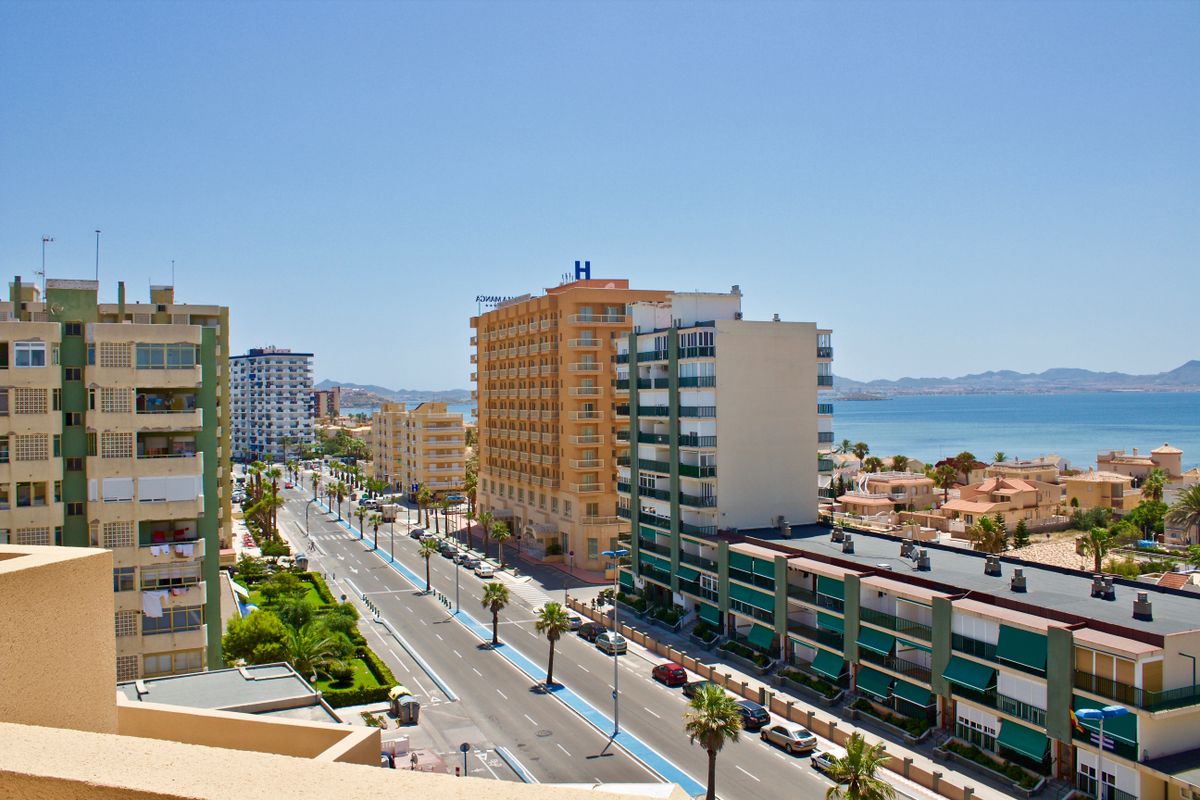
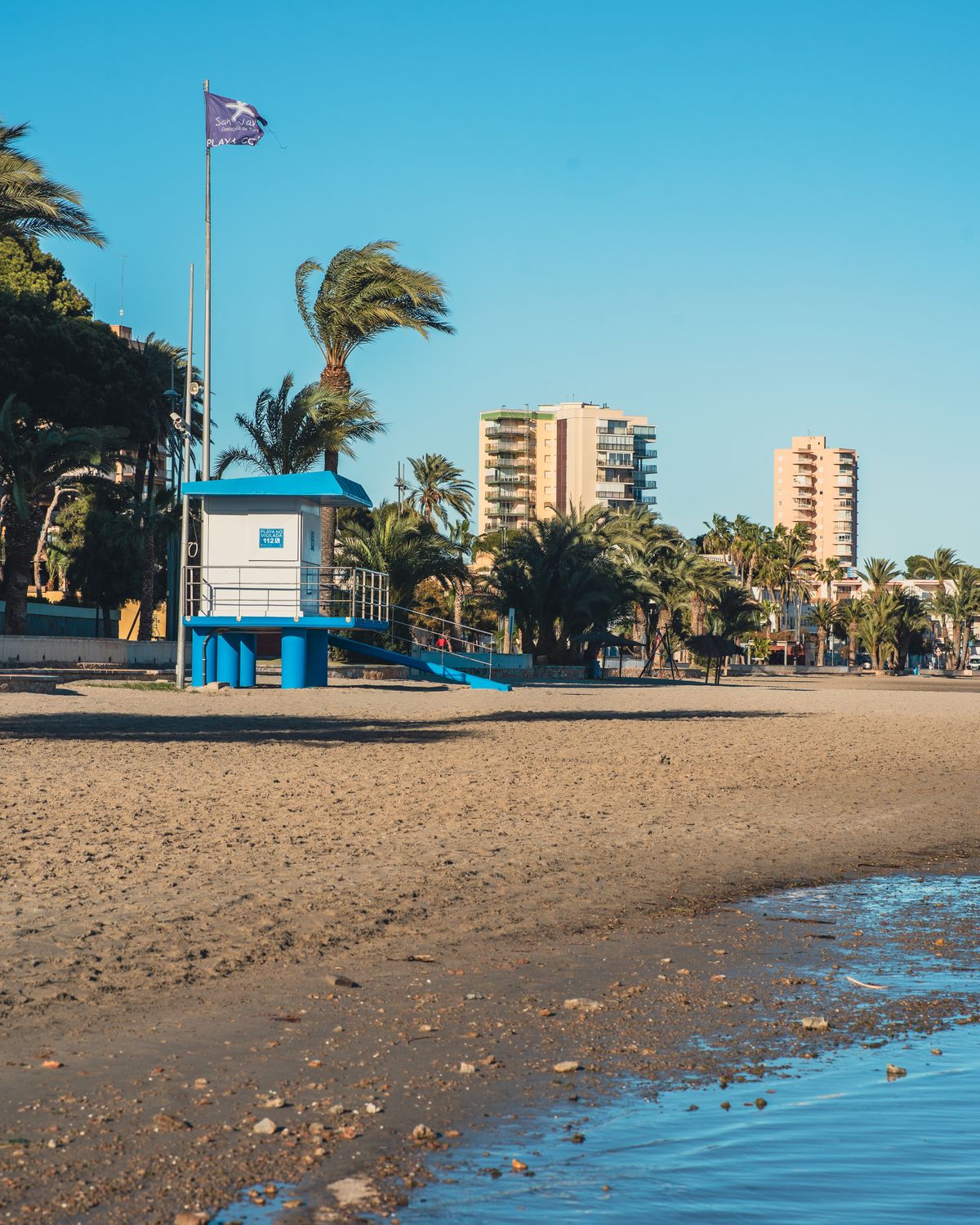
The Mar Menor area — Los Alcázares, San Pedro del Pinatar, Lo Pagán, Santiago de la Ribera, La Manga — has one of the most established UK expat communities in the Murcia region. These are towns where you will find English-speaking neighbours, UK-owned businesses, British-frequented bars and restaurants, and expat social clubs and associations that run year-round.
The social infrastructure matters for retirees in a way it doesn't for holiday home buyers. If you're moving here permanently, you want a community. The Mar Menor towns offer it. Los Alcázares has a particularly active expat community with sports clubs, social events, and established expat services.
Golf resorts — La Manga Club, Roda Golf, El Valle — bring their own social world. The resort community tends to be international (German, Belgian, Scandinavian as well as British) and centres on the golf club as social hub. If that's your lifestyle, it's self-contained and functions well.
For retirees who want to integrate into Spanish life rather than expat life: Cartagena is the answer. Spain's most underrated city — extraordinary history, a real Spanish population, urban culture, and property prices that remain very competitive. Integration is harder without Spanish language skills, but the city rewards the effort. See our Cartagena property guide for detail.
What Retirees Get Wrong
Underestimating the post-Brexit residency timeline. The NLV process takes months, not weeks. Buyers who plan to "sort it out when they arrive" create complications for themselves — you can't legally stay more than 90 days out of 180 on a tourist visa, and overstaying creates problems for your eventual residency application.
Assuming healthcare works like the NHS. It doesn't. Understand the S1 form, get private insurance in place before your NLV application, and don't arrive without coverage sorted.
Buying in a purely seasonal area. Some coastal villages in Murcia are genuinely quiet from October to April — infrastructure closes, social life disappears. Retirees who need a year-round community should be rigorous about checking whether their target area delivers that.
Ignoring the language. English is widely spoken in the expat areas, and you can function day-to-day without Spanish. But healthcare appointments, dealings with local bureaucracy, and integration into Spanish community life all become much easier with basic Spanish. Enrol in a class before or after arrival.
Buying before spending time in winter. Murcia winters are mild — 15–18°C in January, sunny days common — but they're not the same as July. Visit in February to understand what your specific chosen town is like when it's not in peak season.
Which Areas Work Best for Retirement?
Mar Menor towns (Los Alcázares, San Pedro del Pinatar, Lo Pagán, Santiago de la Ribera): The most popular for UK retirees. Year-round community, good infrastructure, lagoon access, established expat social scene. Prices remain reasonable. The right choice for most retirees who want a social, accessible retirement.
La Manga: Summer brilliant, winter quieter. Better suited to retirees who plan to spend summers here and return to the UK for winter, rather than year-round residents. Lower prices compensate.
Golf resorts (La Manga Club, Roda Golf, El Valle): Work well for retirees who are committed golfers or want a managed, lock-and-leave lifestyle. The management fee burden is real — factor €3,000–€6,000/year on top of your mortgage or purchase costs.
Cartagena: City life, Spanish culture, lowest prices in the region. Less expat infrastructure but more genuine cultural life. Better for buyers who are committed to integration.
Águilas: Beautiful coastline, very Spanish, limited expat infrastructure. For retirees who want tranquillity and Spanish life over expat community. See our Águilas guide for detail.
Bottom Line
Retiring to Murcia from the UK is entirely viable in 2026 — but it requires more planning than it did pre-Brexit. The Non-Lucrative Visa is manageable if you start the process early. Healthcare access is good once you're in the system, and the S1 form is a significant benefit for state pensioners that many people don't know to claim.
The cost of living argument remains strong. The climate argument remains overwhelming. And the Mar Menor's combination of calm water, established expat community, and practical infrastructure makes it one of the most genuine retirement destinations on the Spanish coast.
Do the bureaucracy first. Then enjoy the sunshine.
---
*Residency rules, healthcare arrangements and visa requirements can change. Always consult an independent Spanish immigration lawyer before making residency applications. This guide is for informational purposes and does not constitute legal or immigration advice.*
---
Planning a retirement move to Murcia? Search available properties across the region — or read our full Costa Cálida buying guide to understand the market.
Ready to find your property in Spain?
Browse thousands of verified listings from licensed local agents.
Browse properties →